
By Zavi Richardson
Sinking, Not Swimming: An Introduction
As a lifelong Marylander who has grown increasingly interested in aquaculture and water science, my time on the Eastern Shore has shown me the disconnection between my past and plate. While it’s customary for my family to order three dozen crabs to celebrate me coming home from college at the end of the school year, I had never known much about growth of the industry, or its impact in providing economic and social liberation to Black communities throughout the 19th and 20th centuries. My interest in Maryland’s physical landscape began during this past year, when we spent a lesson in my Biogeochemistry class talking about the eutrophication of the Chesapeake Bay. And while yes, the gradual pollution of nutrients over the last several centuries are changing the ecological, chemical, and physical composition of the Bay, I found myself more interested in another fact: Maryland, specifically Maryland’s Eastern Shore, is rapidly sinking, and so are all the communities in it.
As I’ve become more involved with the local communities of Chestertown and Easton, the locations of ShoreRivers’ two offices, the history of the watermen cultures of the Eastern Shore become increasingly apparent, from the oyster cage lines visible on the docks, to the various restaurants boasting their farm-to-table aquaculture connections. Yet, these remnants are being swallowed by saltwater intrusion. According to the Chesapeake Quarterly, over 400 islands within the Chesapeake Bay have been lost due to sea level rise since the region was first explored in the early 1600s. Sharps Island, Holland Island, and James Island, to name a few, were all once inhabited places that have been completely swallowed by the Bay with many more at risk. The people who lived here were forced to relocate, gradually taking apart and rebuilding homes along the mainland of the Eastern Shore in communities such as Crisfield, Cambridge, and Fairmont. Now, even these sanctuary cities have become sites of threat from saltwater intrusion, frequently becoming inundated by the Bay during high tide or heavy rains.
To understand the impact of what is being lost, we have to contextualize the significance of how it was built. By the time that many Black watermen began to enter the Chesapeake Bay’s aquaculture industry, Black people had long existed within the state of Maryland. While the lands became the physical manifestation of displacement and labor abuse, the sea provided an opportunity for the reclamation of labor and self-determination. The growing demand for seafood created a labor shortage, one that began to be filled by Black maritime workers. Black laborers were able to occupy the roles of fishermen and oystermen, with some even managing ships. In 1792, the United States developed the Seamen’s Protections Certificate. While originally designed to prevent impressment into the British Royal Navy during the late 18th century, for the price of 25 cents, these certificates guaranteed citizenship to a growing class of Black watermen. With recognized personhood, Black watermen had the ability to build lives for themselves, establishing self-sustaining communities.
Shucking to Picking: The Labor Shift and House Conditions
At the industry’s peak beginning in the late 19th century until the 1950s, and a brief resurgence from the 1970s - 1990s, crabs marked a cultural and economic staple for the state of Maryland. Though the Atlantic blue crab had long been a local food source, these adorable little crustaceans grew to regional significance starting around 1878, when the McMenamin and Company Packing Plant in Hampton, Virginia perfected the craft of canning freshly picked crabmeat. Canned crab was able to be shipped by steamboat to Baltimore on the other side of the Bay, where it could be shipped by train across the nation, expanding the radius of the market. With the increase in demand for the Chesapeake Bay’s crabs, packing houses quickly shot up along the Eastern Shore, with hundreds popping up through the late 1800s and early 1900s. During World War II, while the rest of the country was rationing food, Maryland’s blue crabs were not subject to rationing, allowing for local crab picking businesses to flourish.
In the winter, oysters were processed. Summertime made room for the lucrative growing crab industry. The in-between seasons of fall and spring formed a market for some clams and other shelled species. While men caught seafood, women processed it, with one oral account reporting that packing houses’ “slow pickers” (those who were older and slower) comprised about 75% of the labor force. Surrounding the work developed some shantytowns and other predominantly Black communities. These towns swiftly grew in size during the Great Migration from the south, with families seeking work that could be done with little to no experience.
In packing houses, women brought their children in to watch and help them work, with reports of women bringing in children as young as seven or eight to help train the new generation of pickers. While men were paid hourly, women were paid “by the piece”, meaning the amount they picked determined how much they made, so bringing in children to work in picking meant that women could take home a higher pay to support their families. These houses were notably integrated well before the Civil Rights Act, with Black and white women working in the same houses. Though adults were socially segregated, the children would often play and talk amongst themselves.
Packing houses functioned as places of empowerment and joy. Black women were able to make a living for themselves, describing the labor as an “honest day’s work”, and saying the industry allowed them to “be [their] own boss.” In a time when limited employment opportunities existed for Black people, especially Black women, picking crabs offered self sufficiency. Black women would also use these spaces to form community, taking the role of watching children, singing spirituals, and carrying on conversation to pass the time. Women would sit at specially designed tables, encouraging the flow of dialogue while picking. Many oral reports describe packing houses as being full of conversation from open until closure.
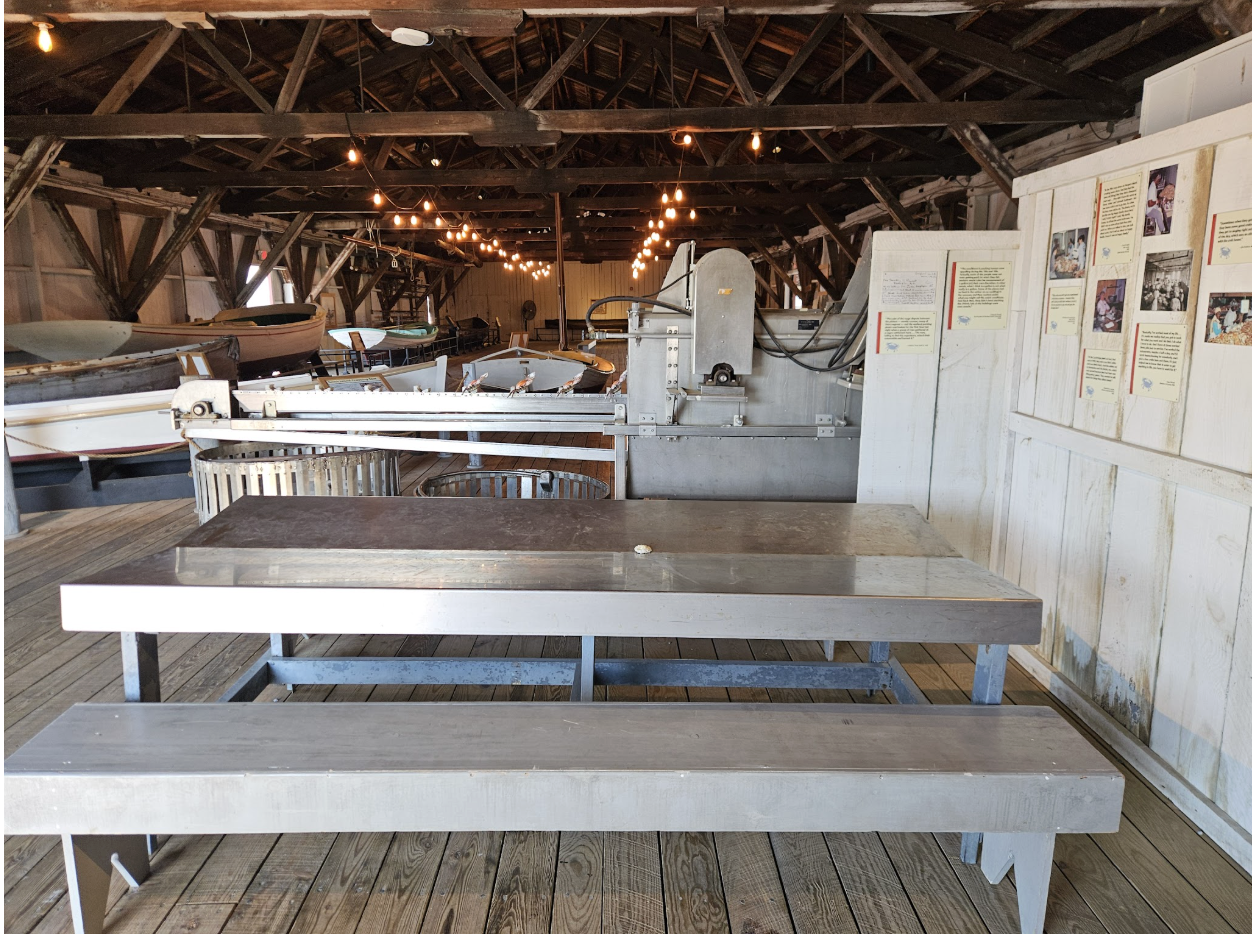
A crab picking table, called a “bend” by pickers due to the bend in the center, on display at the Chesapeake Bay Maritime Museum. Initially the tables were made of wood, but later switched to stainless steel due to bacteria growing in the wood. Behind the table is an early archetype of a “Quik Pik” crab picking machine, which did not see popularity due to the large quantity of crab shell left in the meat.
Money made from picking crabs supported children going through school and families in buying homes, ultimately causing a decline in the picking labor force.
Ground-truthing: Visiting Bellevue and St. Michaels
I recently learned crabs cannot be traditionally farmed like other species partly due to them cannibalizing each other for little more than a mean glare. It’s a species of haters. That, combined with the severe overfishing of blue crab, have created a sharp decline in the population for the last several decades. The annual Chesapeake Bay Blue Crab Winter Dredg Survey estimates that in 2026, there are about 349 million blue crabs. And that sure sounds like a lot, until you compare this against results from when the survey first began; in 1991, the dredge found nearly 850 million crabs, and this was after the peak of the industry. The crab population, the land, and the communities are all sinking: now what? I felt this deep need to study where these communities were being conserved, and how.
My first visit took me to St. Michaels, Maryland, which serves as the home of the Chesapeake Bay Maritime Museum. I had only known St. Michaels because of my research on the Coulbourne and Jewett Seafood Packing Company, whose founders, William Coulbourne and Frederick Jewett, standardized the grading types of crab meat with five terms: regular, claw, special, backfin, and lump. To this day, this system is still used to describe the quality of picked crab meat.
Through a guided tour, I learned much more than I had initially intended to find. Close to the entrance are old workboats, which were fashioned after Indigenous log canoe building techniques. These boats maximized efficiency and speed on the water, useful for catching and racing back to shore to set market price. At the peak of the industry, oral accounts discuss how the work of the crab houses began well before sunrise around 4 a.m., and the day would typically end around 1-2p.m. This allowed for pickers and watermen to work other jobs to support their families since the cost of seafood fluctuated often, and packing and processing did not guarantee reliable income.
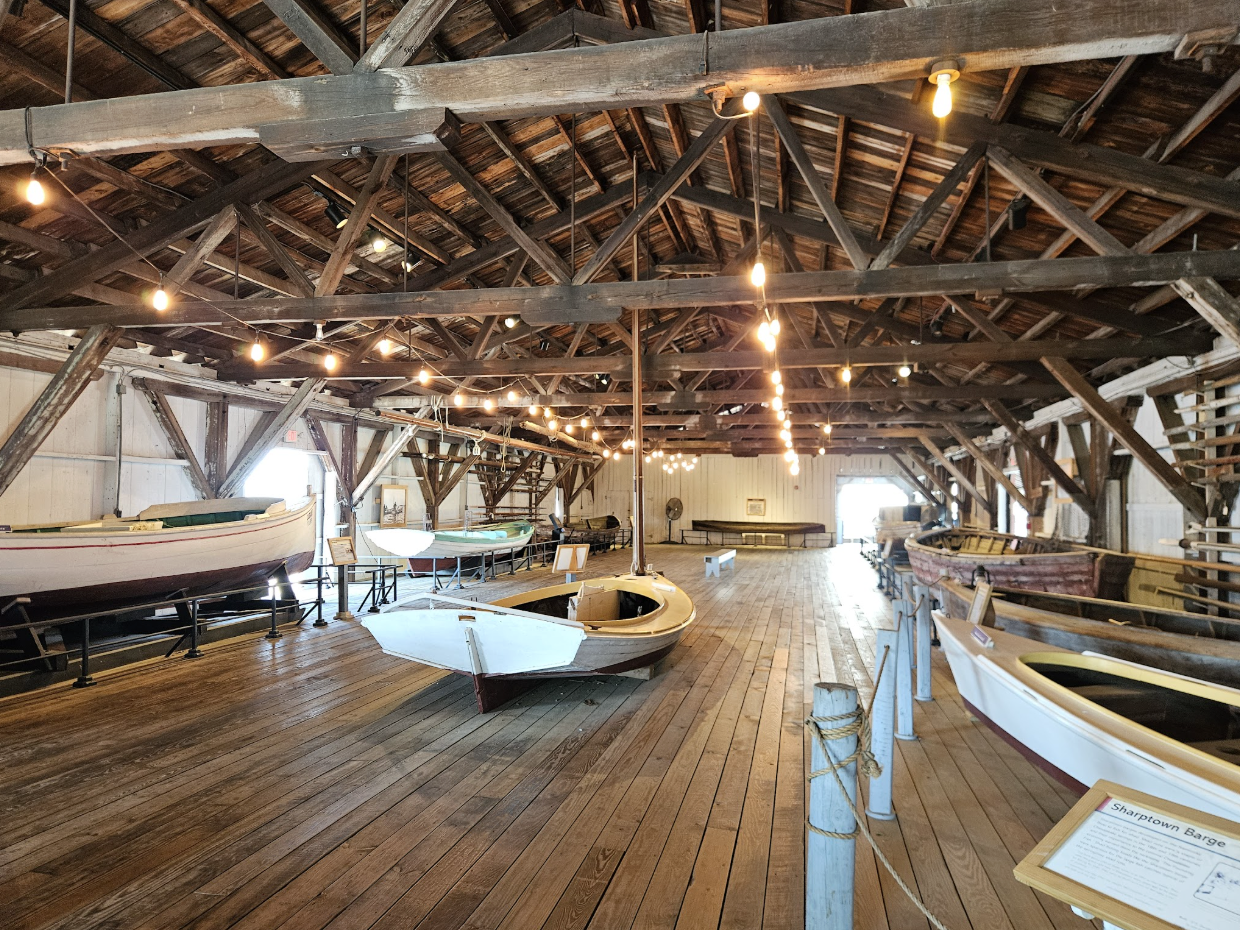
A series of workboats on display at the Chesapeake Bay Maritime Museum. Many of the boats in the collection were donated, with some being restored after washing up to shore, abandoned.
Bellevue, Maryland gave me a completely different side of the story. This little town once flourished as the home of W. A. Turner and Sons Packing Company as well as W. H. Valiant Packing House and the Bellevue Seafood Company. The Turner and Bellevue companies in particular were well known for being two of the only three Black owned seafood packing houses during their time of operation, employing around 80 pickers each.
Modern day Bellevue is a small town of only about 90 people, spanning only three blocks, but Dennis DeShields can point to each building and remember what it used to be when he was younger. The general store and post office have become private residences, as well as the famed Turner Seafood packing house grounds. The only remains of the school was a large rusted bell. One of the homes formerly belonged to his aunt, a one room wooden house original from the turn of the 20th century. Walking through Bellevue is a step back in time, with reminders of the past preserved by the community members. The DeShields are currently working on creating the Bellevue Passage Museum to preserve the history of the town, with construction beginning in August. I got to see the plot where the museum will stand, and will be back to Bellevue before the summer is out.
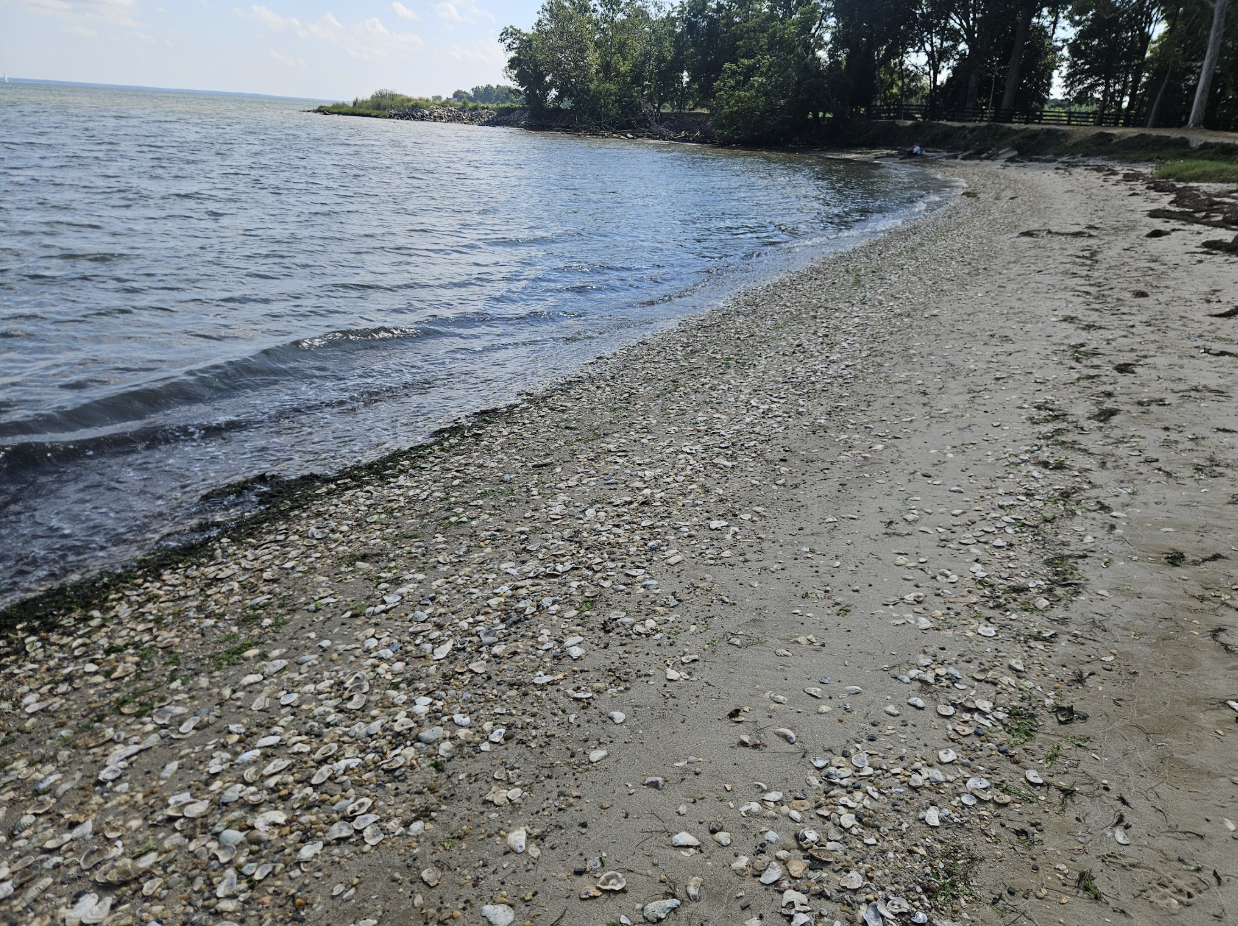
The shoreline of Bellevue Beach, taken August 6th, 2026. The shells along the shoreline are primarily of oysters and razor clams. At the peak of the industry, razor claims were used as bait for crabbing, explaining their prevalence along the shoreline. Currently, Bellevue Beach is a popular recreational spot, as there are no seafood packing plants in the town.
As I went to board the ferry from Bellevue to Oxford, I noticed how blindingly bright the water was. When I walked onto the beach, I saw more clearly that the entire bottom of the harbor and beach were lined with oyster shells and razor clam shells, with the clams once used as bait for blue crabs. Though the packing plants have been on sharp decline, the remnants of the town’s Black watermen history and its importance are very tangible.
Final Reflections
When I first embarked upon researching for this blog post, I foolishly expected things to be relatively straightforward. I knew little about the benefits of oysters and crabs, and thought the communities and economies built surrounding these shelled organisms to be as linear as the time which passed. Instead, I found these communities to be like their shellfish, growing upwards and outwards with time, creating a culture which filled itself with joy and prosperity despite destitution, violence, and racial discrimination. If I have learned nothing else, this experience has demonstrated that the human spirit will always chase joy.
I’d like to thank everyone who helped to make this project possible. Thank you to Mary and Dennis DeShields of the Bellevue Passage Museum for a history of the town as well as a beautiful walking tour, despite the wildfire smoke. Thank you to Tara Coursey, Yolanda Acree, and the entire team at the Kennard African American Cultural Heritage Center for the lesson on the history of Black shantytowns in the Kent Narrows region of the shore. Thank you to Ja’Lyn Hicks and the Water’s Edge Museum for the history of Oxford, the DeShields family of Bellevue, and a lovely conversation. Much appreciation Jill Ferris at the Chesapeake Bay Maritime Museum for the detailed walking tour and six books, which provided oral histories that were more informative to this project than I can explain in one sentence. Finally, thank you to Darran White Tilghman, the ShoreRivers Community Engagement Team, and all others on staff for making these connections possible and just being rockstars.
Meet the Author
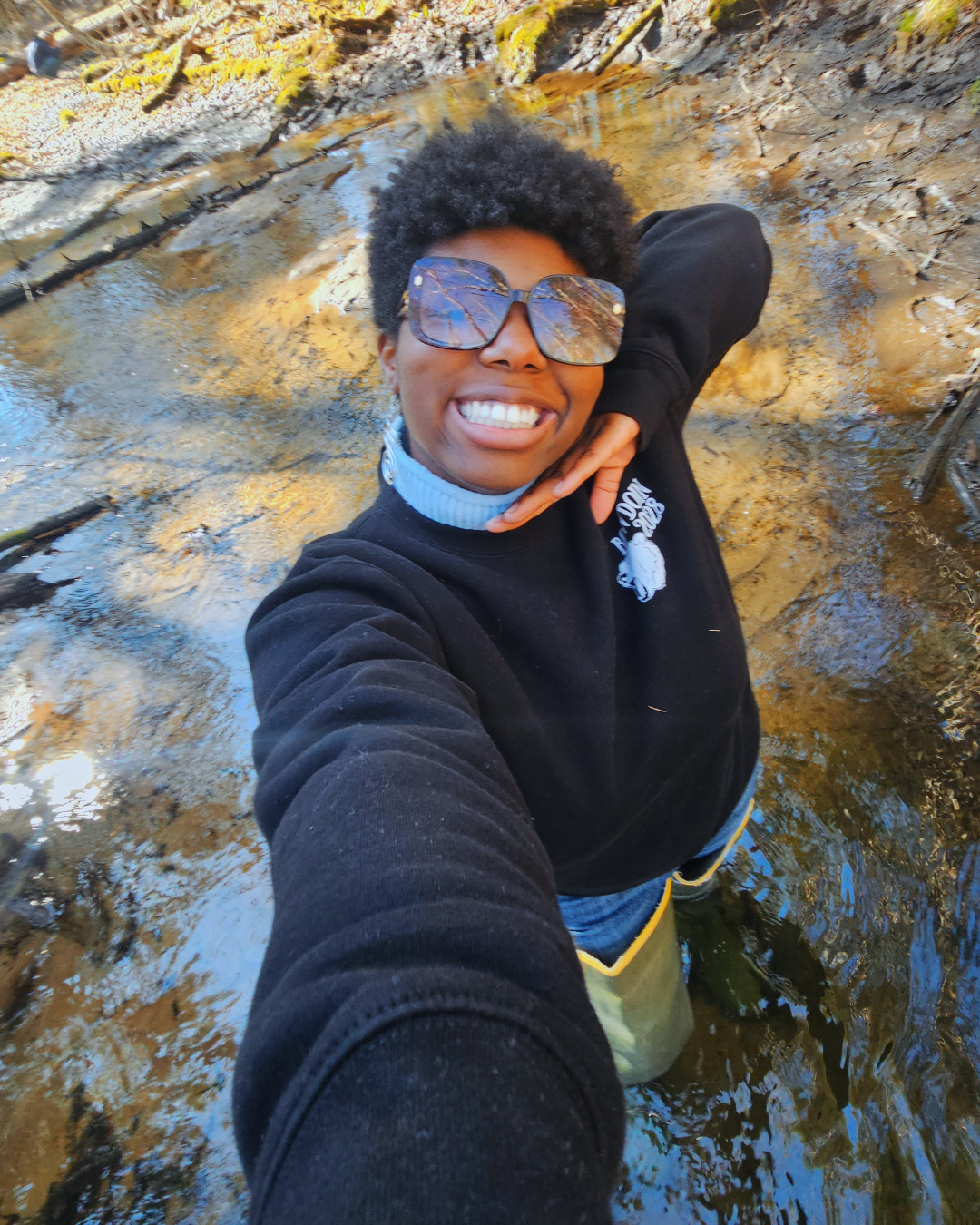
Zavi Richardson
Student at Bowdoin College and 2026 MIA Summer Intern
