Honoring Tradition, Embracing Innovation: Oyster Farming on the Forgotten Coast
By Eileen Byrne
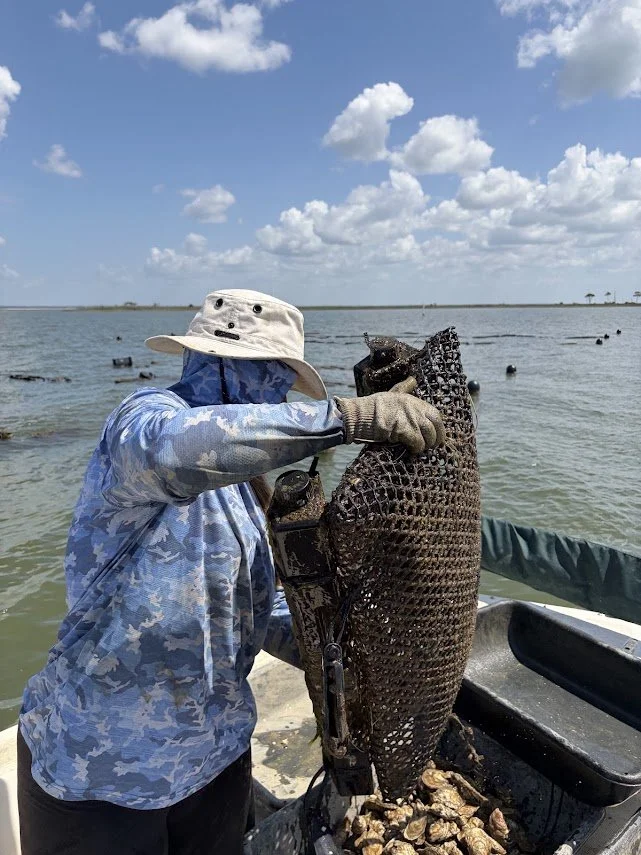
Eileen harvesting oysters
My name is Eileen. I am a Water Sustainability student with a focus on sustainable food systems. This summer, I am representing Minorities in Aquaculture (MIA) as an intern with three oyster farms on Florida's Forgotten Coast: two in the Panacea/Crawfordville area and one in Apalachicola.
Sustainable aquaculture is, to me, one of the clearest case studies of biotic sustainability in action. Its restoration, food production, climate adaptation, economic development, and social equity, all folded into a single intervention. Few industries ask so little of the environment while giving so much back.
Oysters have always been more than seafood on Florida’s Forgotten Coast. For generations, wild oystering was a way of life in this region, a source of income, culture, and community. Understanding where that way of life has gone, and how modern-day oyster farming practices are bringing pieces of it back, is the running thread through everything I've experienced this summer.
Panacea and Crawfordville
In the Panacea–Crawfordville area, I worked with two farms: Pelican Oyster Co., a small farm run solely by Cainnon, and Cypress Point Oysters, managed by Jordan. Both farms grow their oysters on leases in Oyster Bay and process them at Spring Creek Marina, behind the former Spring Creek Restaurant. Before it was devastated by Hurricane Michael in 2018, Spring Creek was an iconic Florida Panhandle fish camp and restaurant. Purchased by Leo Lovel and his family in 1977, it was cherished by the community for its fresh, locally caught seafood and unmistakable "Old Florida" charm, leaving behind a legacy.
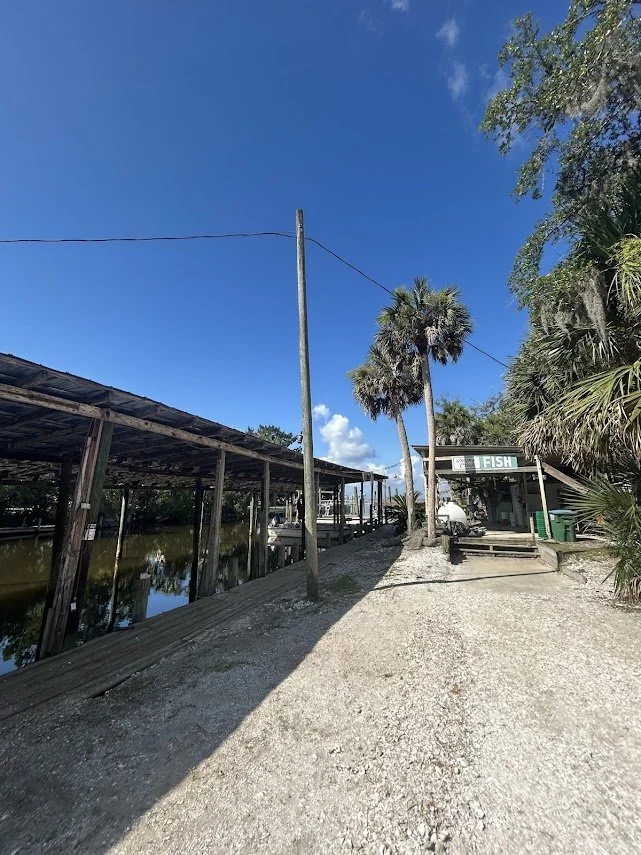
Spring Creek Marina; behind restaurant
Before the storm, Spring Creek Restaurant was a travel destination. Patrons drove in from Tallahassee, South Georgia, and Alabama for fresh, local seafood. The marina and bay directly behind the restaurant supplied that seafood: mullet, shrimp, and offshore species like amberjack and cobia, much of it caught by Leo himself, who became a commercial fisherman supplying the restaurant daily with his catches. But Leo’s livelihood was already under pressure before the hurricane ever hit. Florida's 1994 constitutional net ban, which went into effect in 1995, outlawed the entangling gill nets that had long supported commercial mullet fishing. It was a conservation win for the state's fisheries, but it gutted the income of fishing families like Lovel's. When Hurricane Michael tore through the Panhandle in 2018, the damage to the restaurant was too severe to recover from, and the Lovel family chose to close.
Lovel sold the restaurant, the 12-room motel, and marina to oyster farmers and soon-to-be owners of Cypress Point Oysters, Jody and Dewey Houck, in 2021. Today, the building that once plated fresh-caught seafood for locals and travelers from surrounding states now serves as an oyster farming home base and processing center. Lovel still maintains an important presence in Spring Creek as a culture bearer, someone who carries the area's history forward even as its economy has changed shape around him. I had the pleasure of meeting Leo Lovel one afternoon, and he shared how much this place meant to him. He holds it in a special place in his heart, visiting often and reliving his fondest memories.
As you walk through the old restaurant, the bones of the building are the same; the waterlines from four-foot flooding are evident. The relics and memories of decades of operation remain. But the work happening on the site now is part of something new: the revival of a working coastal community through oyster leases in Apalachee Bay and Oyster Bay. Sustainable oystering in Florida is still a young industry, but it has made remarkable progress in a short time, and it's hard not to feel optimistic watching a piece of history return to productivity.
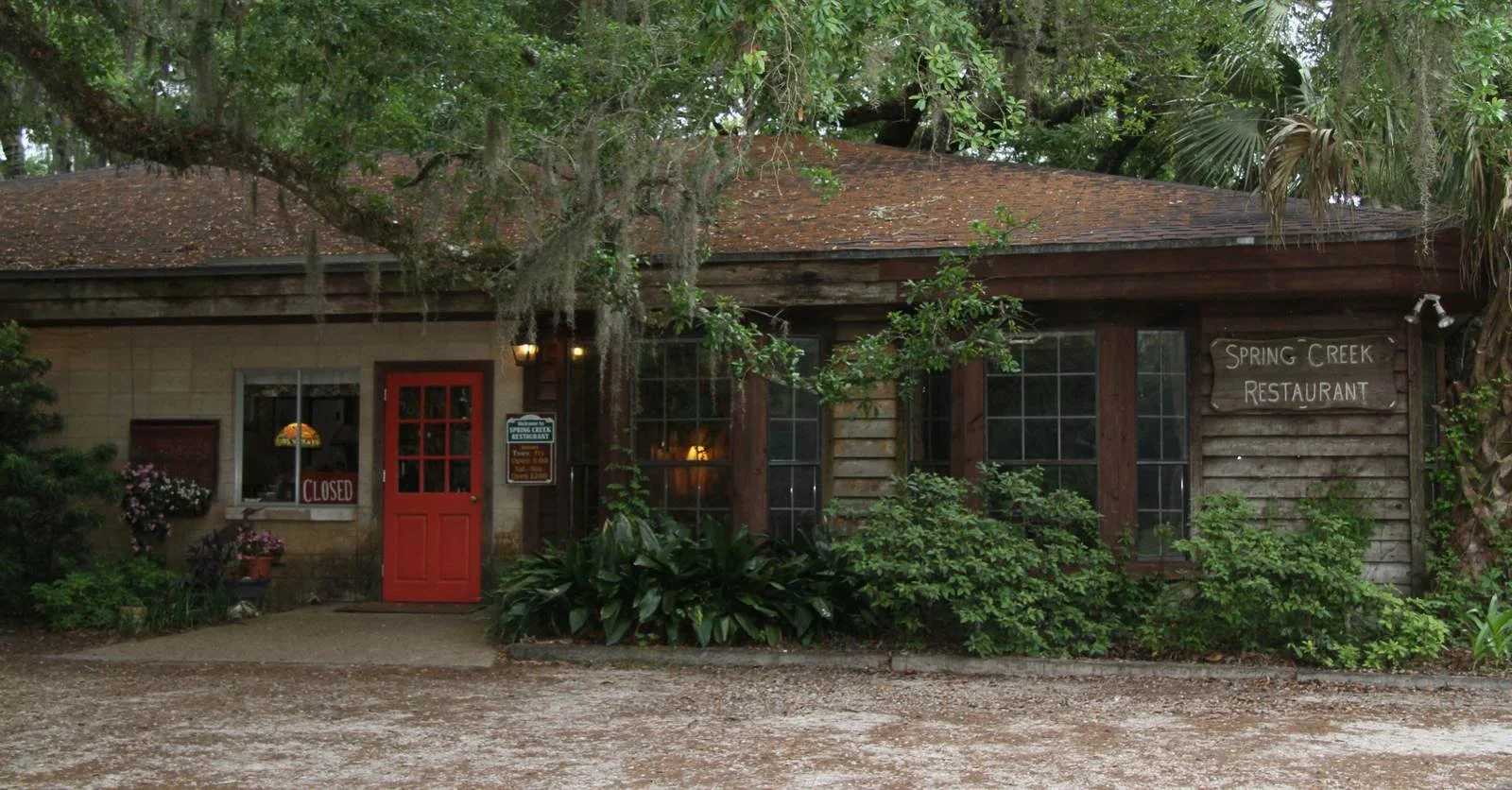
Spring Creek Restaurant
Apalachicola
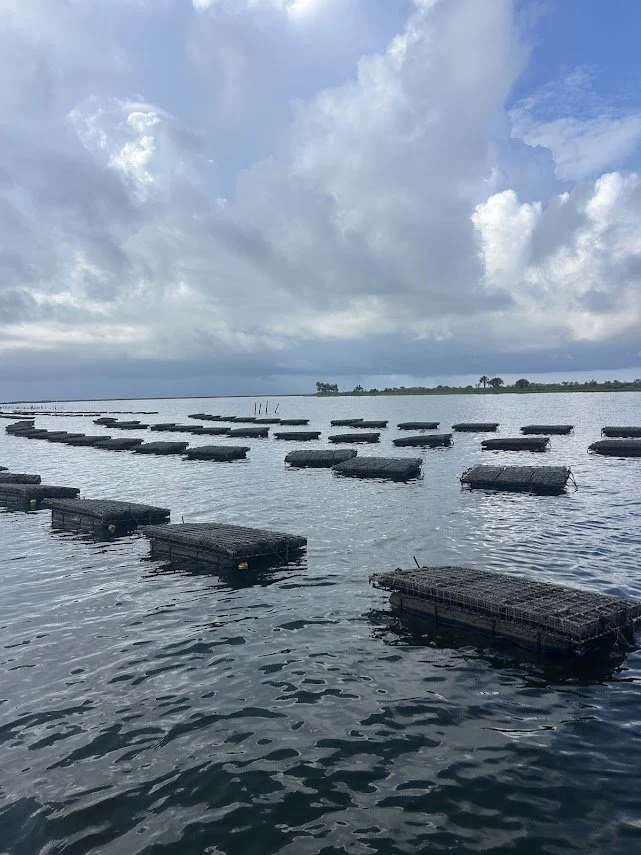
Pelican Oyster Farm
Apalachicola was once known as the Oyster Capitol of the World, but decades of overharvesting and environmental stress led to the collapse of Apalachicola Bay's wild oyster fishery and, eventually, a full closure of wild harvesting. The state of Florida closed the bay in 2020 for a five-year restoration period, giving the reefs time to recover from years of declining abundance.
That restoration has proven to be effective. As of January 1, 2026, after five years, the bay reopened for a limited wild harvest season that ran through the end of February. Talking with people in town, it's clear what that reopening meant. For the first time in years, there was newfound energy throughout the town. When asked about the closure, one oysterman described feeling rejuvenated, saying the reopening brought back a flood of memories after five long years away. The bay is now in off-season, closed until the next harvest window opens this September. Hopefully to be consistently open during oyster season for decades to come.
While traditional bottom leases have existed for centuries, modern off-bottom oyster farming, which uses floating cages in the water column, is relatively new. Following the collapse of the wild oyster fishery in 2012 and the subsequent environmental closure in 2020, many traditional wild harvesters transitioned to, or experimented with, modern aquaculture techniques in the surrounding region. The state began approving off-bottom commercial leases in coastal waters around 2015 to help supplement the local supply chain while the wild fishery rebuilds.
Water Is Life Oysters is part of a growing network of sustainable aquaculture operations along Florida's Forgotten Coast. The farm opened in 2022 in Rattlesnake Cove, in the middle of the state's wild harvest moratorium. Its founders are rooted in the Gulf Coast community and the waterways surrounding Apalachicola. Their decision to farm oysters came from a sense of obligation, both to the bay and to the people who depend on it. Rather than wait for the wild population to recover on its own, they chose to participate actively: growing oysters in floating bags suspended in the water column, where the animals are protected from predators and feed on the Bay's nutrient-rich water. In doing so, they're growing some massively beautiful Apalachicola Bay oysters, giving the natural reefs a chance to revive while helping sustain a way of life built on respect for these waters and everything they provide.
Apalachicola oysters have always had a distinct taste, one that locals and tourists alike specifically seek out. After enjoying many myself on the water this summer, their sweet briney taste is something I won’t soon forget, a flavor shaped by the exact mix of fresh and saltwater only this stretch of the Gulf Coast can produce.
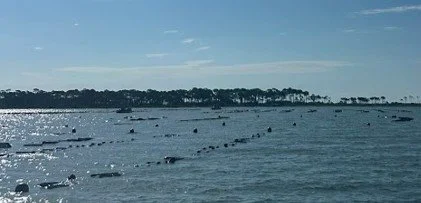
Water is Life farm
Conversations with farmers back in Panacea had led me to believe that Apalachicola farmed oysters came out of the water free of biofouling; short for biological fouling, the growth of organisms like barnacles and algae on gear and shell. That turned out to be only half true. Working with Water Is Life Oysters in Apalachicola, I've seen firsthand plenty of biofouling. When I asked about it, the answer surprised me: in the first few years after the leases opened, the oysters genuinely did come out of the Bay clean and pristine. The biofouling crept in slowly, over time, as the surrounding ecosystem caught up. Far from being a flaw, that's a sign of a healthy, maturing reef, proving over time how oysters bring aquatic ecosystems back to life. Now, every day on the farm, seeing the biofoul makes me smile. It's living proof of the ecological work oysters do: filtering the water around them while hosting a small, biodiverse ecosystem on their shells. Most importantly, these leases have done exactly what they were meant to do. They gave the wild reefs room to recover while still putting Apalachicola oysters, the ones the whole community takes pride in, on the market.
What strikes me most, watching both of these communities up close, is that sustainable oyster farming isn't a break from the past so much as a continuation of it. Cainnon and Jordan are doing essentially what Lovel did decades ago: reading the water, working the tides, building a living off what the bay provides. The floating bags and managed leases and the science behind reef restoration is new, but the relationship at the center of it, between a person and a body of water they depend on and respect, is the exact relationship the wild oystermen and commercial fishermen have always had with this coast.
At both farms, spent oyster shells aren't thrown away. They're collected and returned to the bay, where they serve as the base material for new reef structures, giving wild oyster larvae something solid to attach to and grow on. It's a small, almost invisible step, but it ties the farming directly back to the reefs it's trying to help rebuild.
In that sense, farming oysters here isn't replacing the old ways so much as tipping its hat to them, finding a way to keep that relationship alive even after the wild fisheries it grew out of had to step back. The Forgotten Coast isn't being reinvented, but being given a way to keep being itself.
SourcesAnderson, A. (2021, May). Saltwater South: Forgotten Coast. Southern Foodway Alliance. https://www.southernfoodways.org/interview/leo-lovel/Benjumea, I. (2025, August). The former “Oyster Capital of the World” could soon make a comeback. Channel 7 WJHG. https://www.wjhg.com/2025/08/13/former-oyster-capital-world-could-soon-make-comeback/Castellano, S. (2026, January). The 5-year Apalachicola oyster ban is lifted | flamingo magazine. Flamingo. https://flamingomag.com/2026/01/07/apalachicola-oyster-ban-is-lifted/Reiley, L. (2018, April). Shell Game. Floridian. Tampa Bay Times. https://projects.tampabay.com/projects/2018/special-report/shell-game/panhandle-apalachicola-wild-oysters-aquaculture/Meet the Author
Eileen Byrne
B.S. from Florida State University & M.S. from University of South Florida ~ 2026 MIA Summer Intern
