Connections are Currency: MIA Internship Program
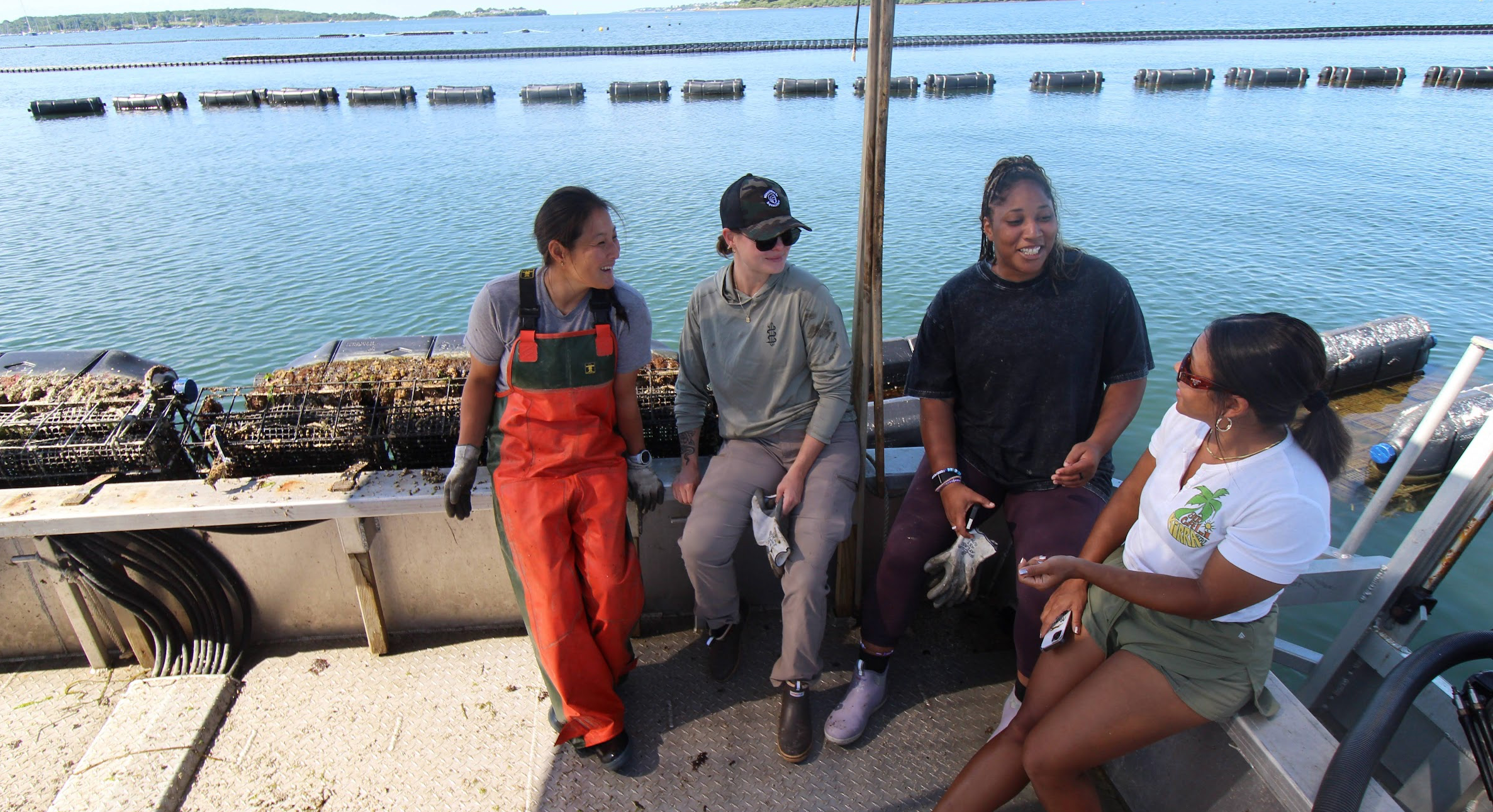
Starting college or first entering the workforce can seem exciting, convoluted, and even overwhelming. There is often a fulfilling but ambiguous end goal, with the details on how to achieve that not so clear. Along the way, questions naturally arise: How do I get to my dream job? Where do I start? Is this right for me?
No one ever found all the answers in one day, and especially not on their own. Oftentimes, it’s our lived experiences and the people we meet along the way that help shape our goals and turn them into reality. Good or bad, these experiences help decide, "Yes I loved that,” or ‘Thank you, but no thank you.”
“For me, I didn’t know exactly what I wanted to do but those internships and experiences helped me figure out what I liked and how to move closer to a successful career, regarding them” recalls Imani Black, founder and CEO of Minorities in Aquaculture (MIA). “It made me think about things realistically a little bit more than I had before when I was younger in college.”
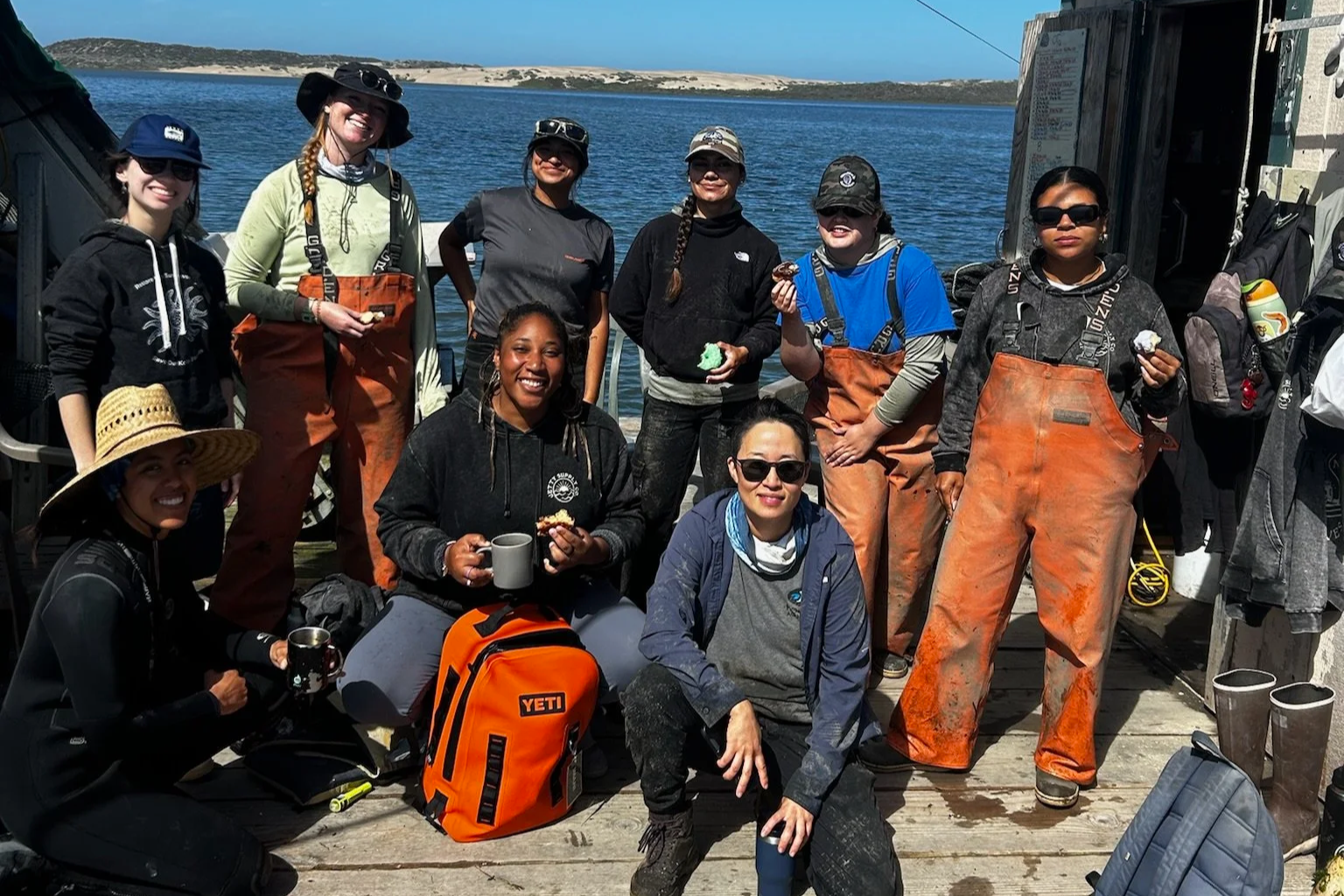
Imani visiting 2025 Interns in California
MIA’s Aquaculture Internship Program is built around just that; providing hands-on experience for those starting out to gain experiences and knowledge to build their careers. For the past five summers, MIA has fully funded between five to fourteen interns for a 10-week internship experience.
During these 10 weeks, interns have the opportunity to participate in academic research, laboratory conservation work, or work on an oyster farm. Across the East and West Coast, our host partners span ten different states and provide expert mentorship with potential job opportunities.
“I learned so much throughout my entire internship not only about the workforce, but about myself as well.” One past MIA intern shared. “I learned what works for me and what doesn’t, and my likes and dislikes.”
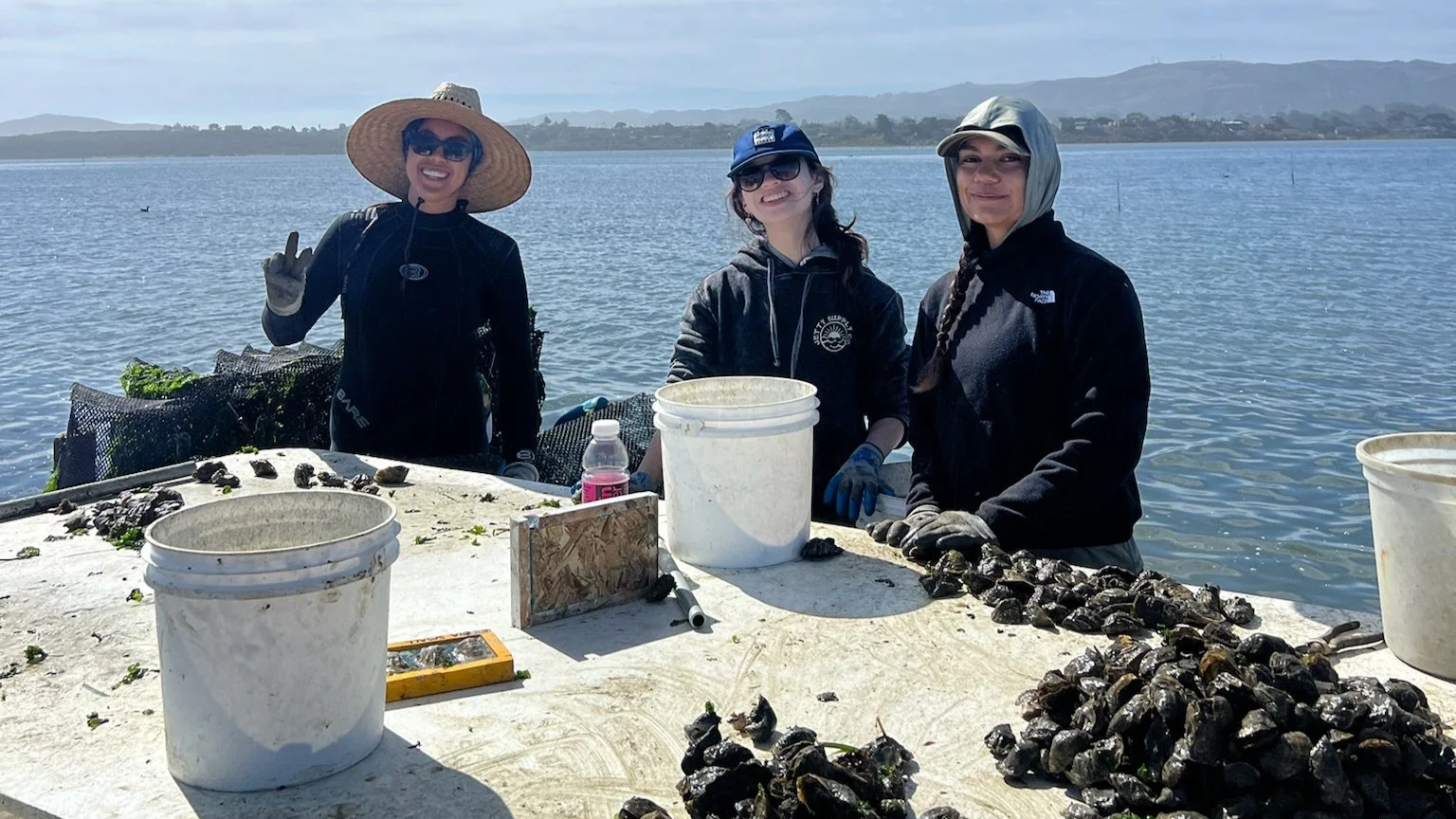
2025 SUmmer interns
Alexa, Cailley & Alexa
The aquaculture industry, from job to job, can look very different from each other depending on region, species, and what the area of focus is. The future of sustainable aquaculture is from a multidisciplinary approach, which is why MIA has a wide variety of host partners to reflect just that. Experiences range from working with salmon in Alaska, to harvesting oysters in South Carolina. There is even opportunity for studying or researching in lab settings instead because MIA understands the variety for indoor and outdoor career preferences.
“Before this internship, I had very little knowledge about aquaculture,” another intern explained. “It broadened my understanding and helped me decide what I would be interested in doing later down the road.”
MIA’s goal is exactly that, to provide early career professionals with a unique summer internship, while also meeting people in their field to help find them the careers they want. After each summer, about 1-3 interns are hired as an employee by their host partner. However, once the internship has been completed, MIA’s help doesn’t end there.
This non-profit acts as a networking hub to pair interns or MIA members to industry leaders for mentorship or employment opportunities. In the past this typically has been through newsletters and member events, but this year a member portal is launching to better facilitate that connection and expand the MIA community.
A 2025 MIA intern described the impact of this community, “Working with each other, and not only connecting in a professional sense, but also connecting as humans made this internship so much more meaningful than it would have felt otherwise.”
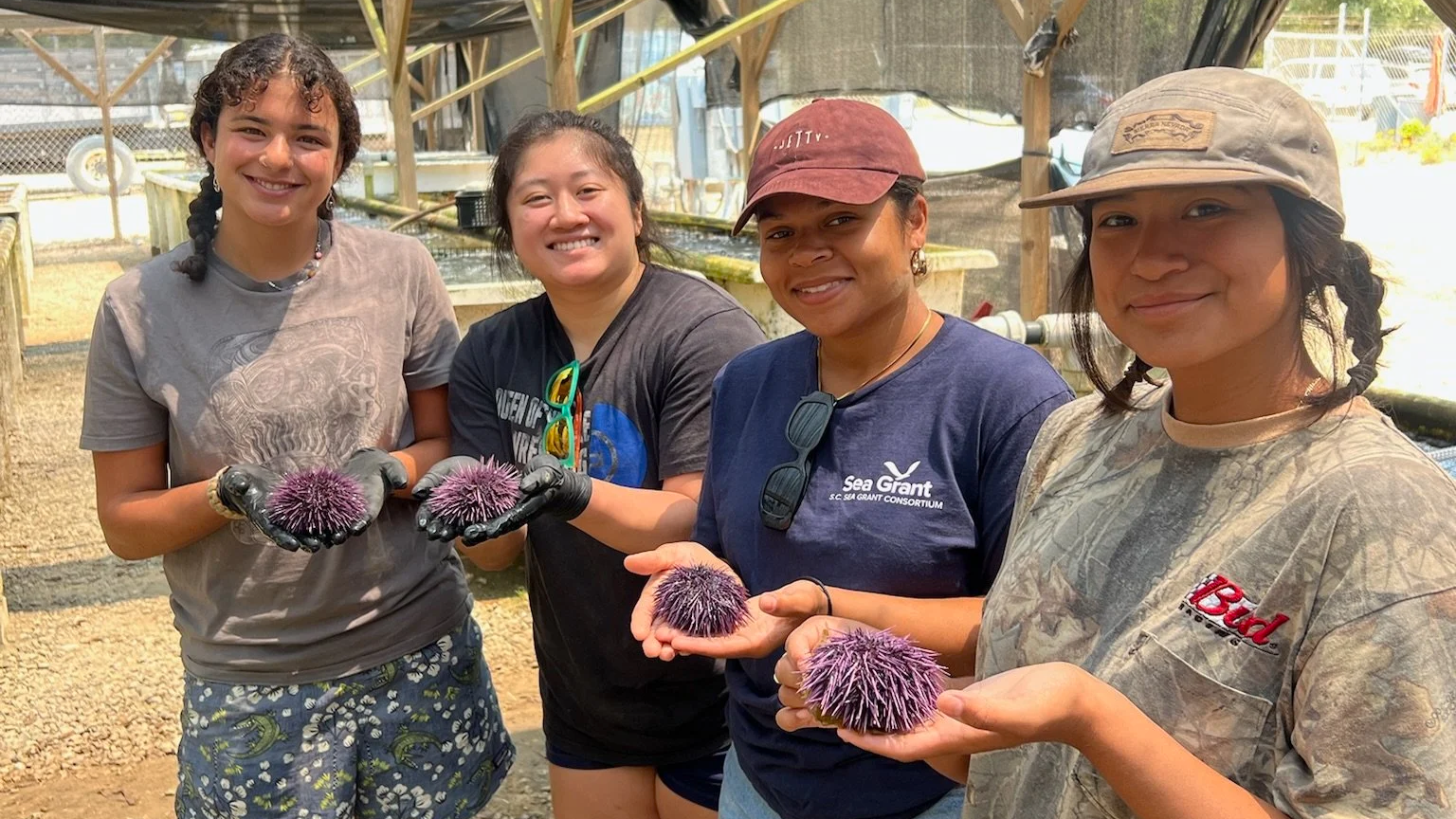
2025 Summer Internship
Barrett & Isidra with 2 Cultured abalone student interns
Although interns are spread all over the country, Imani and the MIA team prioritize building connections through orientation, online sessions, and field trips. Every intern is visited by Imani throughout the summer and experiences a multi-day field trip to local businesses and even neighboring interns. If interns are located in neighboring states or locations, Imani brings interns to other host partner locations or other MIA community members' places of employment. This past summer, some of our interns also attended MIA’s annual networking barbeque event.”
“Overall, the field trip gave me a chance to interact and connect with my cohort and MIA team which was amazing and a summer highlight,” she shared. “Especially by the final cookout party, I was able to immerse myself in this community and felt proud to be part of MIA.”
Networking is almost everything in today’s workforce, especially in science-related jobs. Individuals also need to have the experiences to push their careers forward and the skills to communicate that as well. During the summer internship, aside from vocation, MIA interns also dip their toes into media and storytelling by developing a blog on a topic of their choosing and professional social media content that amplifies their work and learning. Learning how to effectively communicate aquaculture related topics and speak about it professionally to a variety of different audiences is crucial in today’s job market.
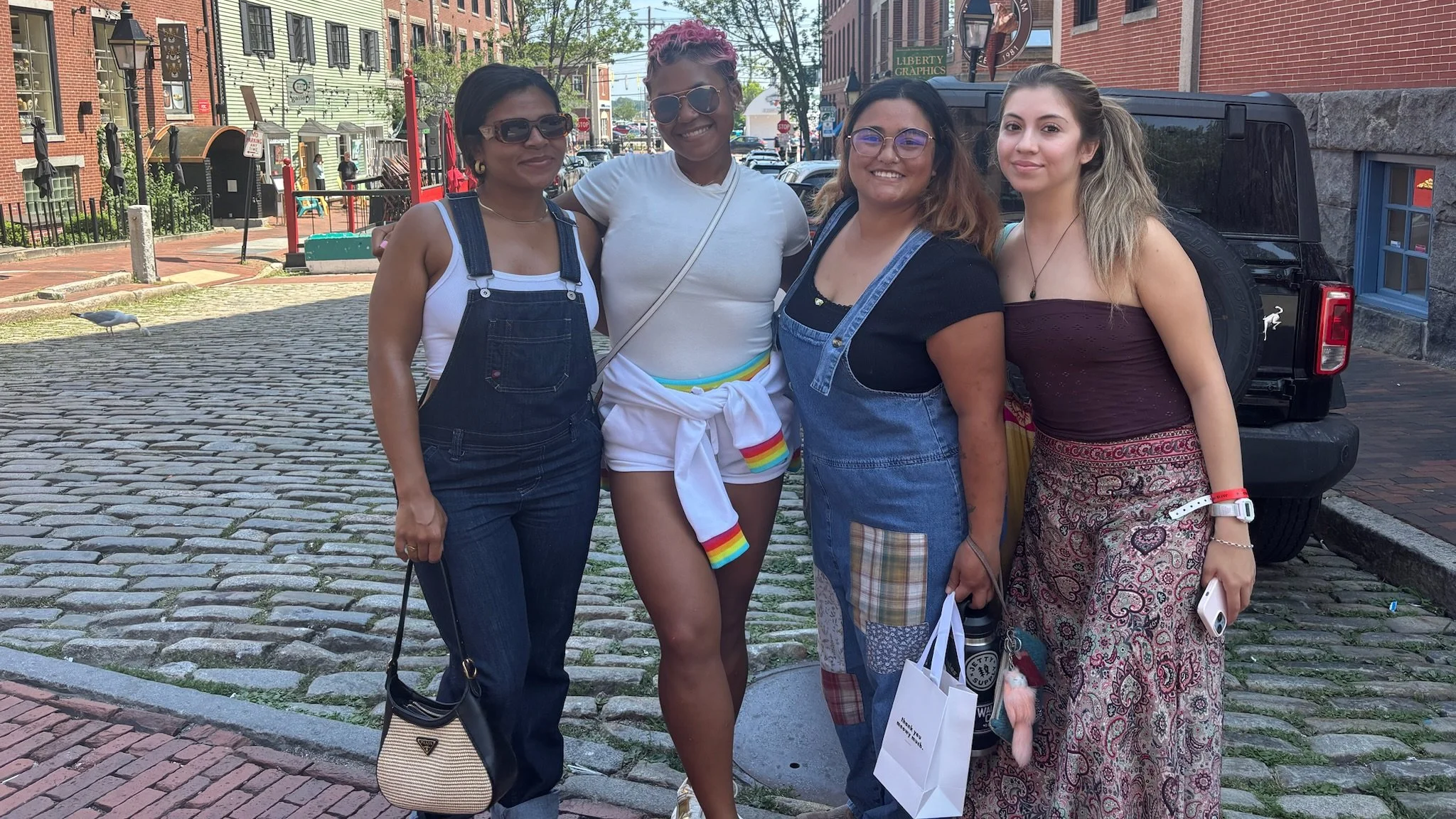
2025 Summer Interns
Barrett, sydney, alyssia & valeria
What shapes most young professionals or graduating students are lived experiences that stay with them. Good or bad. Looking at different career paths or professionals and thinking, “What they’re doing is really cool, how do I do that?” is often the best place to start.
meet THE AUTHOR
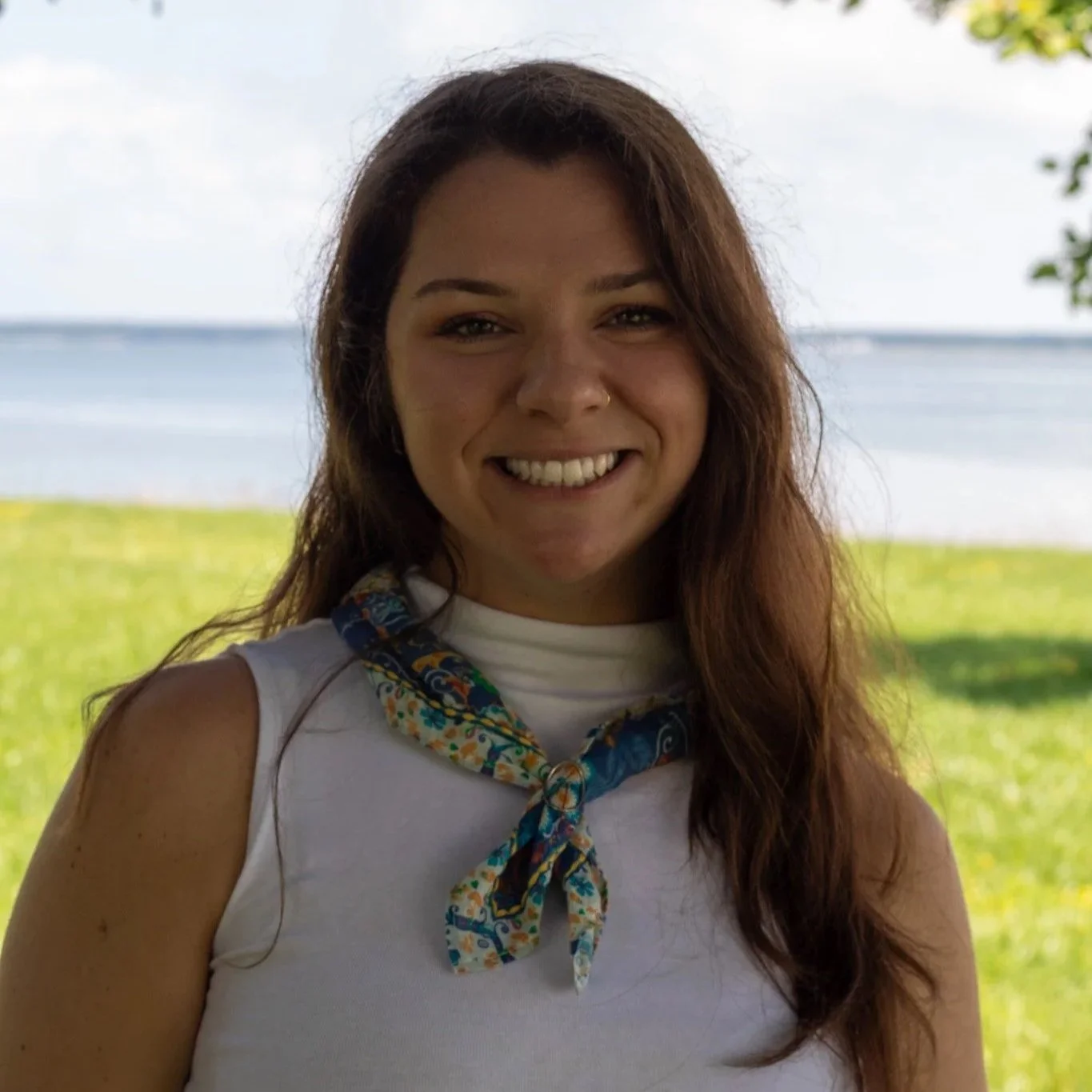
MIchella Salvitti
MIA Communications Team
Science/Written communications coordinator
