Kelp’s Help: The Hidden Superpowers of Underwater Forests
By Cailley Gerald-Yamasaki 2025 Summer Intern
Growing up on the Monterey Bay, I’ve heard much praise of the kelp forest ecosystem and I’ve taken it for granted that kelp forests are important and worth protecting. But as for the details as to why? I was a little fuzzy. I decided to look into the specific reasons we care about the kelp forest and read some of the studies that back them up. It appears that kelp forests are valuable for many diverse reasons, from sequestering carbon, hosting hundreds of species, to producing compounds useful in pharmaceuticals. As kelp populations continue to decline globally, it is indeed worthwhile to work to protect and restore kelp forests.
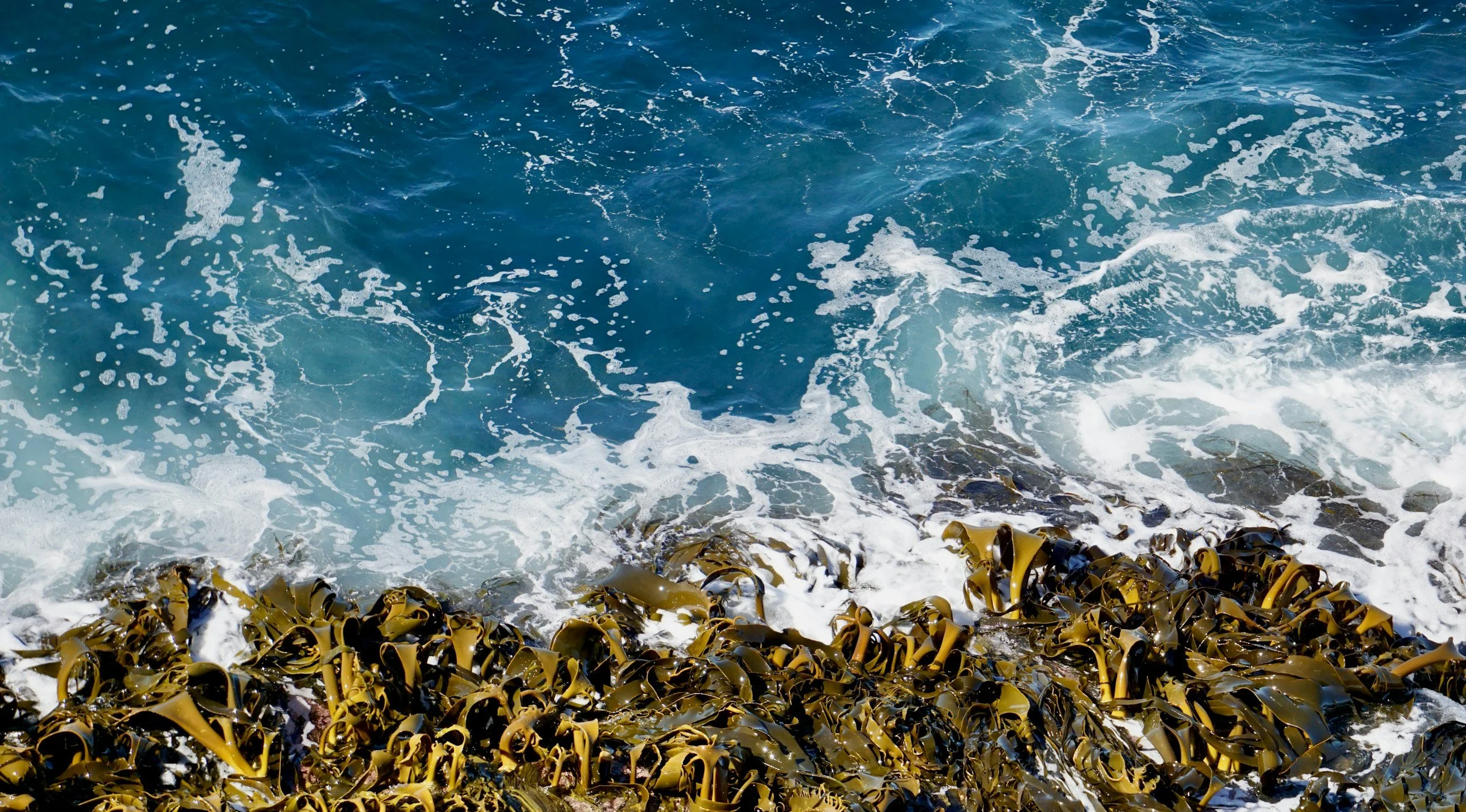
While tighter and looser definitions exist, the word “kelp” is generally used to mean any of the over one hundred species of large, brown, marine algae.1 Kelp forests—often tall, dense groupings of one or more species of kelp—can be found along 25-30% of the world’s coastlines and make up the largest vegetated marine ecosystem in the world. Science journalist Avery Schuyler Nunn experiences kelp forests firsthand,
“The kelp forest is wild in a way few places still are….Each time I dive in, it feels as if the whole forest breathes. The kelp rises in towering columns, over a hundred feet tall, and the light passing through and around it appears in shifting layers of gold and green.”
Kelp forests are home to many other organisms—the World Resources Institute calls them “some of the most productive and diverse habitats on Earth”. Kelps modify pockets of environment—changing light conditions and water turbulence, providing shelter from open ocean predators, and even increasing pH in nearby waters to locally mitigate ocean acidification. Many organisms take advantage of these protected conditions: slow-growing encrusting seaweeds and small sessile invertebrates thrive in the shade which drives out their normal competitors for space; crabs, pipefish, and rockfish overwinter in the holdfasts which anchor kelps to the ground; Patagonian squid attach their eggs to giant kelp; and juvenile pollack feed near kelp forests then hide in the canopy when predators approach.
Additionally, many animals eat the kelp itself either while it is still growing or disconnected fragments that have drifted ashore or settled in the deep sea. In Norway, a single Laminaria hyperborea kelp individual was found to host 80,000 organisms representing more than 70 species. Kelp forests in the UK are recorded with more than 500 species of plants and animals residing in the habitats they provide.
Some of the animals that rely on kelp forests are part of commercially important fisheries. On the west coast of North America, fisheries of abalone, lobster, sea urchins, salmon, rockfish, kelp bass, lingcod, giant seabass, cabezon, white seabass, and sea cucumbers rely on kelp forest habitats. In Australia, almost one billion dollars worth of lobster and abalone reside in kelp forests every year. In northern Europe, the connection between kelp and Atlantic wolffish became particularly visible when sea urchins’ overgrazing of kelp in the 1970s correlated with a decline in annual catches of Atlantic wolffish from 3,300 tons to about 870 tons.13 American lobster in Canada, codfish in Europe, mackerel in Asia, oysters in South Africa and many, many more all rely on kelp forests and historically have been lucrative food sources.
Not only does kelp host diverse and numerous organisms, some of which we find useful, humans also harvest and use the kelp itself. We use kelp for food, fertilizers, pharmaceuticals, aquaculture feed, bioplastics, and even land livestock feed.
meet THE AUTHOR
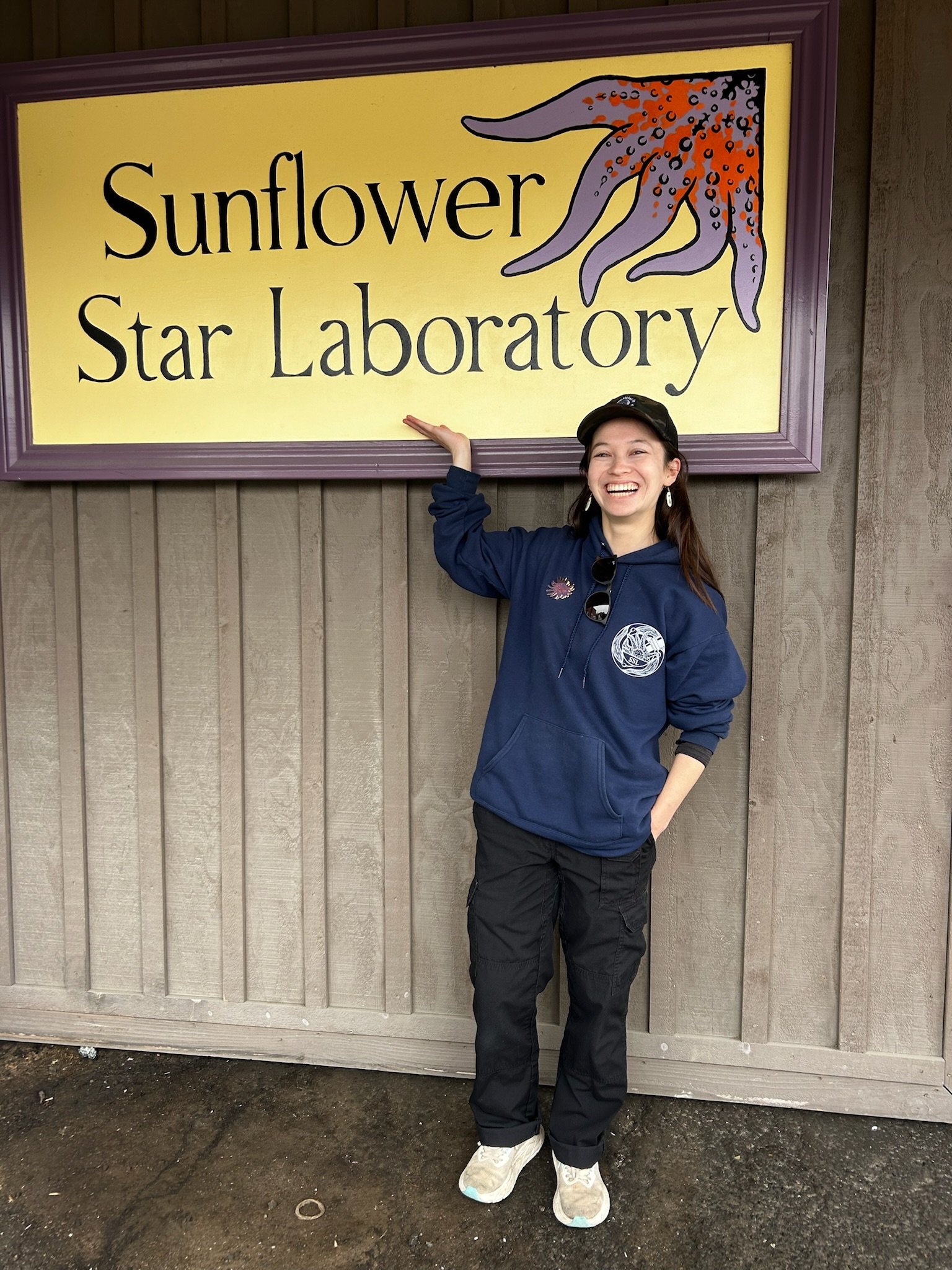
Cailley Gerald-Yamasaki
B.s. from Vassar College & 2025 MIA Summer intern