More Than a Weed
By Ariana Skye Hervas-Jones
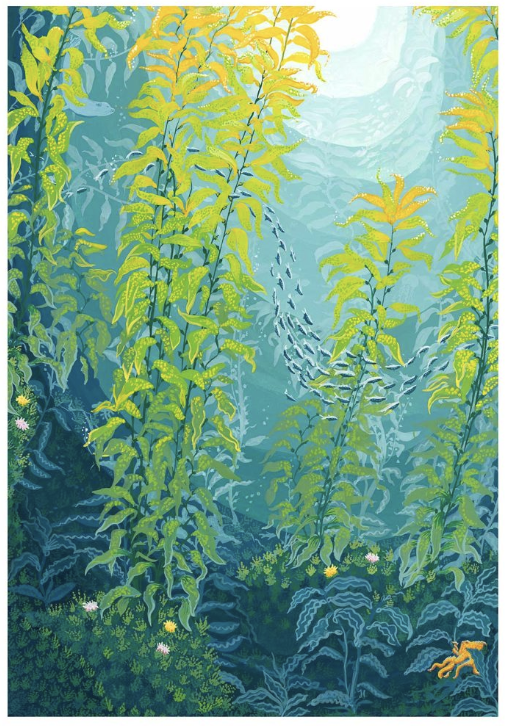
Seaweed Art - Kelp Forest, by Jessica Hutchison
When the Icelandic poet Egill Skallagrímsson lost his son, he withdrew from the world, refusing to eat or drink. His daughter, desperate to bring him back to life, devised a plan. She offered him seaweed, knowing its saltiness would make him thirsty. Then she brought him milk, slowly coaxing him back towards eating and, eventually, to writing poetry in memory of his son.
The story, preserved in the medieval Icelandic Egils saga, offers a small but remarkable glimpse into a relationship between people and seaweed. Here, seaweed was not simply something growing along the shoreline. It was part of an intimate act of care, woven into family, grief, nourishment and the rituals of everyday life.
It is easy to think of history as a story made by people. We remember the scientists who made discoveries, the artists, the heroes, the communities who shaped landscapes and the individuals whose names survived generations. But what about the other living beings that have been there alongside us? The ones that rarely appear in our histories at all. The ones dismissed as ordinary, unimportant or simply part of the background.
Seaweed is one of them.
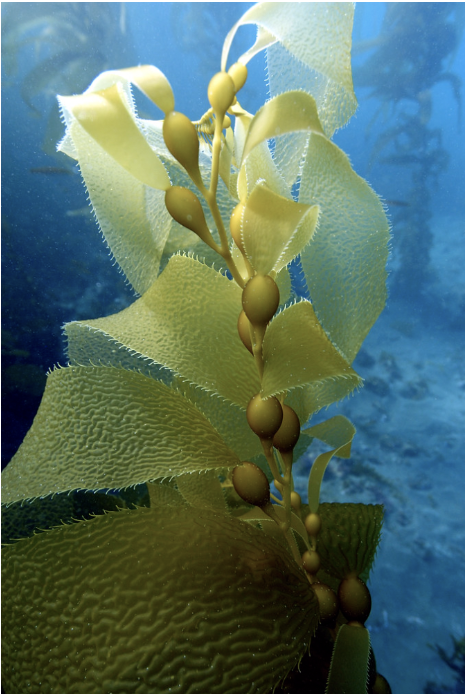
Giant Kelp underwater taken by National Ocean Service
For many of us today, seaweed is something to avoid. It wraps around our ankles at the beach, clings to fishing lines and gathers in smelly piles along the tideline. We even call it a weed - a word usually reserved for plants growing where they are not wanted.
Yet these marine organisms have been part of human lives for thousands of years. They have fed coastal communities, replenished soils, supported industries and livelihoods, and become deeply woven into the cultures of people living alongside the sea. Their histories are not separate from ours. They are quietly woven through them.
And perhaps that is why their story is so easy to miss.
This is a story that has largely slipped beneath the waves: a story of seaweed, and of the people who have learned to live with it, depend upon it, work with it and care for it.
Again and again, when people faced scarcity, changing landscapes or uncertain livelihoods, they looked towards the shore. There, waiting with every tide, was seaweed.
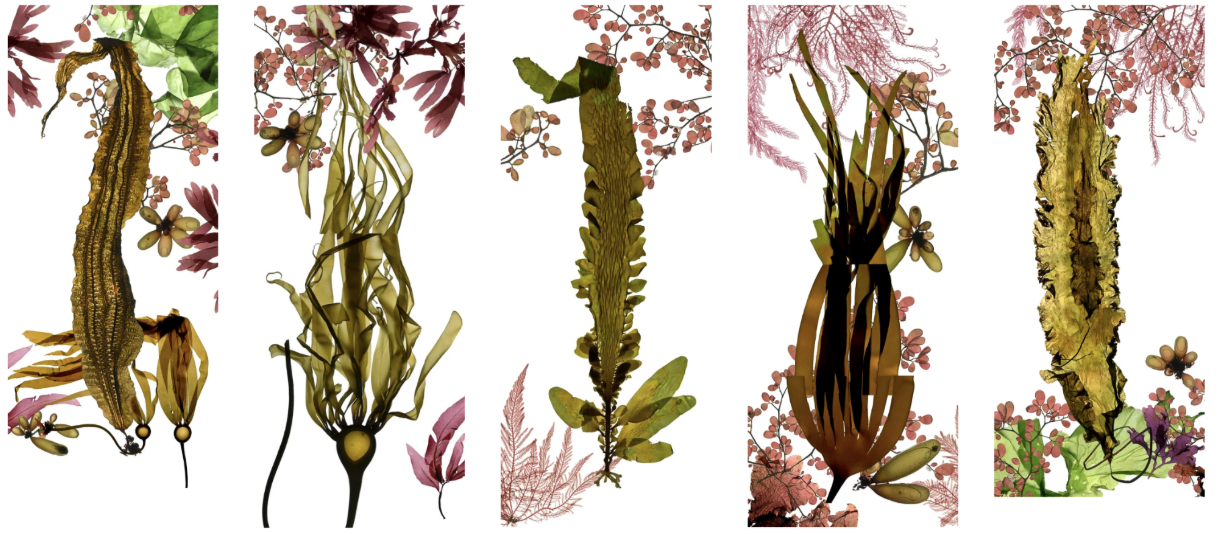
Seaweed prints by Josie Iselin for her exhibition called The Curious World of Seaweed
A Walk Through History
Long before supermarkets, before industrial agriculture and before kingdoms rose and fell, people lived by the rhythms of the coast. Around 8,000 years ago, hunter-gatherer communities in parts of Europe were consuming seaweed and other aquatic plants alongside shellfish, fish and other marine foods. Archaeological evidence, including preserved food remains and traces of aquatic resources found at prehistoric sites, suggests that seaweed formed part of coastal diets long before the arrival of modern agriculture. Even as farming spread, some communities continued to rely on marine resources, maintaining relationships with the shoreline over thousands of years.
Seaweed offered something that land-based crops could not always guarantee. It required no planting, irrigation or fertile soil, and many species could be gathered from the wild as the tides receded. For coastal communities, the shoreline was not simply the edge of the land, but an extension of the landscape itself, offering food and materials shaped by the changing seasons and tides.
Thousands of years later, people were still learning the same lessons.
When Norse settlers arrived in Iceland around AD 874, they entered a landscape of thin soils, harsh winters and short growing seasons. Farming was possible, but resources were never guaranteed.
Along Iceland’s rocky coastline grew an abundance of edible seaweeds. One of the best documented was dulse (Palmaria palmata), known locally as söl. In some Icelandic communities, August was known as sölvamánuður, or dulse month, reflecting the importance of its seasonal harvest.
Gathering seaweed required an intimate understanding of the coastline. People knew where particular species grew, when they could be harvested and how to dry and preserve them before the weather turned. This knowledge was not written in scientific manuals, but passed between generations through everyday practices, oral stories, observation and experience.
Around a century later, Norse settlers established settlements in Greenland. There they encountered an even harsher environment, while Inuit communities had already developed detailed knowledge of the Arctic landscape. Seaweed formed part of traditional Greenlandic Inuit diets and was relied upon for nourishment and in times of scarcity.
Centuries passed, yet the shoreline continued to provide.
Across Scotland’s western Highlands and islands, generations of crofters farmed difficult soils. Heavy Atlantic rainfall leached nutrients from the land, while strong coastal winds made it hard for anything to grow. After storms, families collected kelps and wracks washed onto the shore, spreading them across their crofts to replenish the soil.
Seaweed became a natural fertilizer, returning minerals and organic matter to depleted soils. Oats, barley, potatoes and other crops could be grown with its help. Long before synthetic fertilizers transformed agriculture, coastal communities had already learned how the sea could replenish the land.
By the late eighteenth century, seaweed had become valuable for another reason entirely.
During the Napoleonic Wars, Britain’s supply of imported alkali, essential to industries such as glassmaking and soap production, was disrupted. Attention turned towards Scotland’s western coast and islands, where vast quantities of kelp were harvested, dried and burned to produce alkaline ash. The industry grew rapidly, employing tens of thousands of people across Orkney, the western coast and the Outer Hebrides.
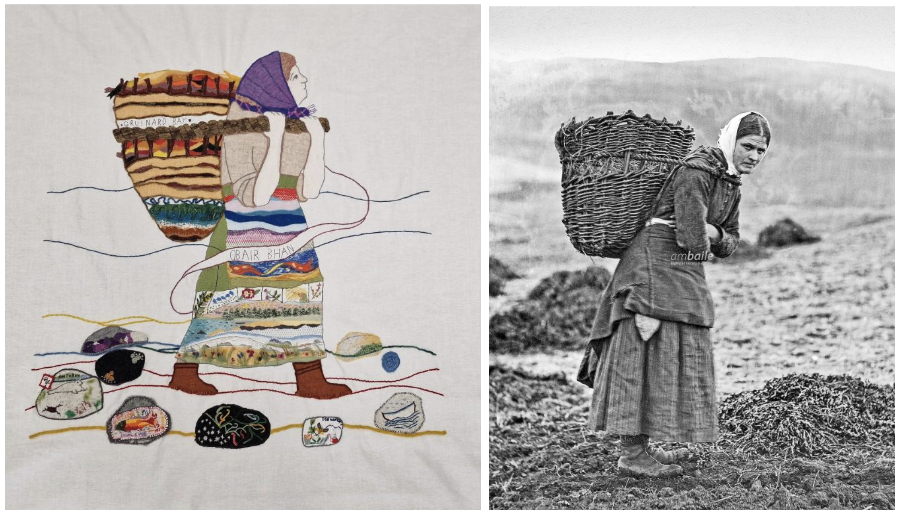
Left: Morag, the Kelp Collector. Image provided by Ewe Stitchers. Right: Young woman harvesting seaweed to be burnt (c. 1880s)
Yet this prosperity was short-lived.
When the wars ended, cheaper imported alkali returned to British markets and the kelp industry declined sharply. Landowners lost income, labourers lost employment and many coastal communities experienced severe economic hardship. Although its industrial value faded, seaweed remained part of everyday coastal life, continuing to fertilise fields, feed livestock and supplement local diets.
Only a few decades later, another crisis emerged across the Irish Sea.
When potato blight reached Ireland in 1845, harvests failed repeatedly. Between 1845 and 1852, around one million people died and another million emigrated. No single food could prevent such devastation, but along Ireland’s western coastline, families drew upon generations of coastal knowledge, gathering shellfish and seaweed alongside whatever other foods were available.
Seaweeds including carrageen moss (Chondrus crispus) were gathered and used as food, particularly in coastal communities. It could be boiled into broths, jellies and puddings, and was also valued as a household remedy.
In Wales, laver (Porphyra species), known as bara lawr when prepared as laverbread, has long been harvested along the coast and cooked into a rich, dark paste, traditionally served with foods such as cockles and bacon. These traditions remind us that seaweed's history is not only one of hardship and survival, but also of taste, culture and belonging.
___
Throughout history, seaweed has occupied an unusual place in human memory. It rarely appears as the hero of the story, celebrated in monuments or textbooks, yet it has repeatedly been woven into the everyday practices that sustain communities. It has healed and sustained, restored exhausted soils, supported livelihoods and helped people navigate uncertainty. It has connected people to the land and the sea.
While it may not have been the obvious hero of many stories, its history is a reminder that the forces shaping human lives are often the ones we overlook.
Perhaps that is why this forgotten history deserves to be remembered today.
Returning to the Shore
Today’s challenges look different from those faced by Viking settlers or Scottish crofters. Yet the underlying question remains remarkably familiar.
What happens when the systems we depend upon become fragile?
Climate change is reshaping agriculture through rising temperatures, more frequent droughts, declining soil health, freshwater shortages and increasingly unpredictable weather. As global populations continue to grow, governments, researchers and farmers are searching for more resilient ways to produce food while reducing pressure on land and freshwater resources.
Once again, many are looking offshore.
Seaweed is often described as a crop of the future. It grows without fertile farmland or freshwater irrigation, taking up nutrients directly from the surrounding water. It can be cultivated in places unsuitable for conventional agriculture, while providing habitat and shelter for marine life.
Around the world, seaweed farming is expanding rapidly. Countries such as Japan, South Korea and China continue centuries-old cultivation traditions, while nations including Norway, Scotland, Ireland, Iceland, Canada and the United States are investing in new seaweed industries. Researchers are exploring its potential as food, fertiliser, livestock feed, biodegradable materials, pharmaceuticals and ecosystem restoration.
It is easy to present this as a revolutionary discovery. But history suggests otherwise.
Seaweed is not a new solution to modern problems. It is an old companion returning to our attention.
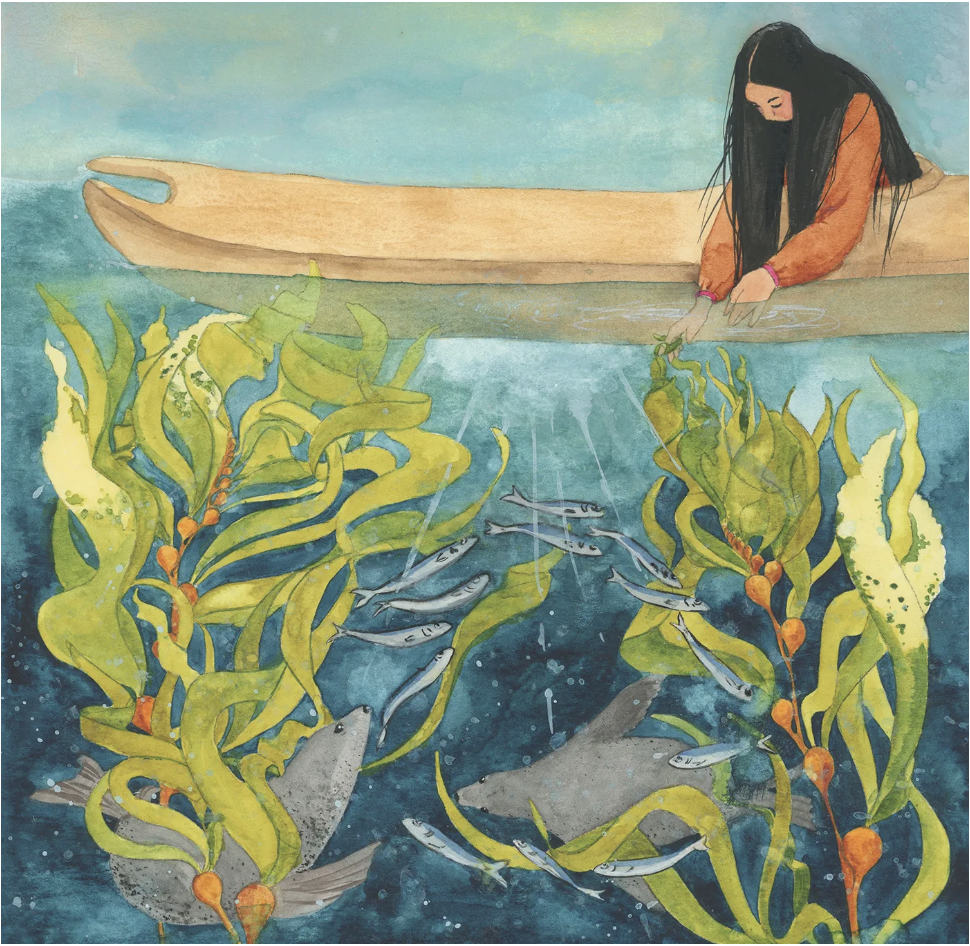
Holding onto seaweed. Illustration by Aly McKnight, an artist and member of the Shoshone-Bannock Tribes who uses art to feature vibrant colors and Indigenous stories.
Remembering the Past for a Better Future
While seaweed is often celebrated today as a silver-bullet solution to some of our greatest environmental challenges, history tells a more complex story. Seaweed never prevented famines, stopped wars or rescued economies from collapse. But it did something equally important. Time and again, it softened hardship. It nourished people when harvests failed, restored exhausted soils, sustained livelihoods when industries faltered and remained a dependable part of coastal life.
So much of seaweed’s history has been forgotten. We have not only forgotten what seaweed can do, but how people once lived with it. For much of human history, seaweed was not viewed simply as an untapped resource waiting to be exploited until something more profitable came along. It formed part of a living coastline that people came to know intimately. Families understood when different species appeared, where they grew, when to harvest them and when to leave them behind. This knowledge was built through generations of observation, care and reciprocity. People recognised that their own wellbeing was inseparable from the wellbeing of the sea.
Today, we stand at another moment of uncertainty. Once again, seaweed is drawing our attention. This time, however, we have the opportunity to bring centuries of coastal knowledge into conversation with new ideas. Seaweed farming, when approached thoughtfully and in the right places, offers one example of how this relationship might evolve. It can create livelihoods for coastal communities, provide food and renewable materials, support marine habitats and lessen pressure on land-based agriculture, all while working with the natural rhythms of the sea rather than against them. In many ways, it is not something entirely new, but another chapter in a much older story of people learning to live alongside seaweed.
But if we are to write this next chapter, whose voices should shape it?
While I am far from having all the answers, what I have learnt is that the knowledge held by coastal and Indigenous communities must be central to these conversations. Generations of observation, practice and relationship have produced ways of understanding shorelines that cannot simply be replaced by a new technology or imposed ideas. This knowledge is also living and changing, and the people who hold it should have a say in how their waters, coastlines and resources are used. Working with seaweed means listening not only to what it can provide, but to the people who have long known these waters.
Perhaps that is what this long history asks of us today. Not to place all our hopes in seaweed as the next miracle solution or to see it as the next resource to exploit when in times of need, but to rediscover a more reciprocal way of living with the world around us.
Meet the Author
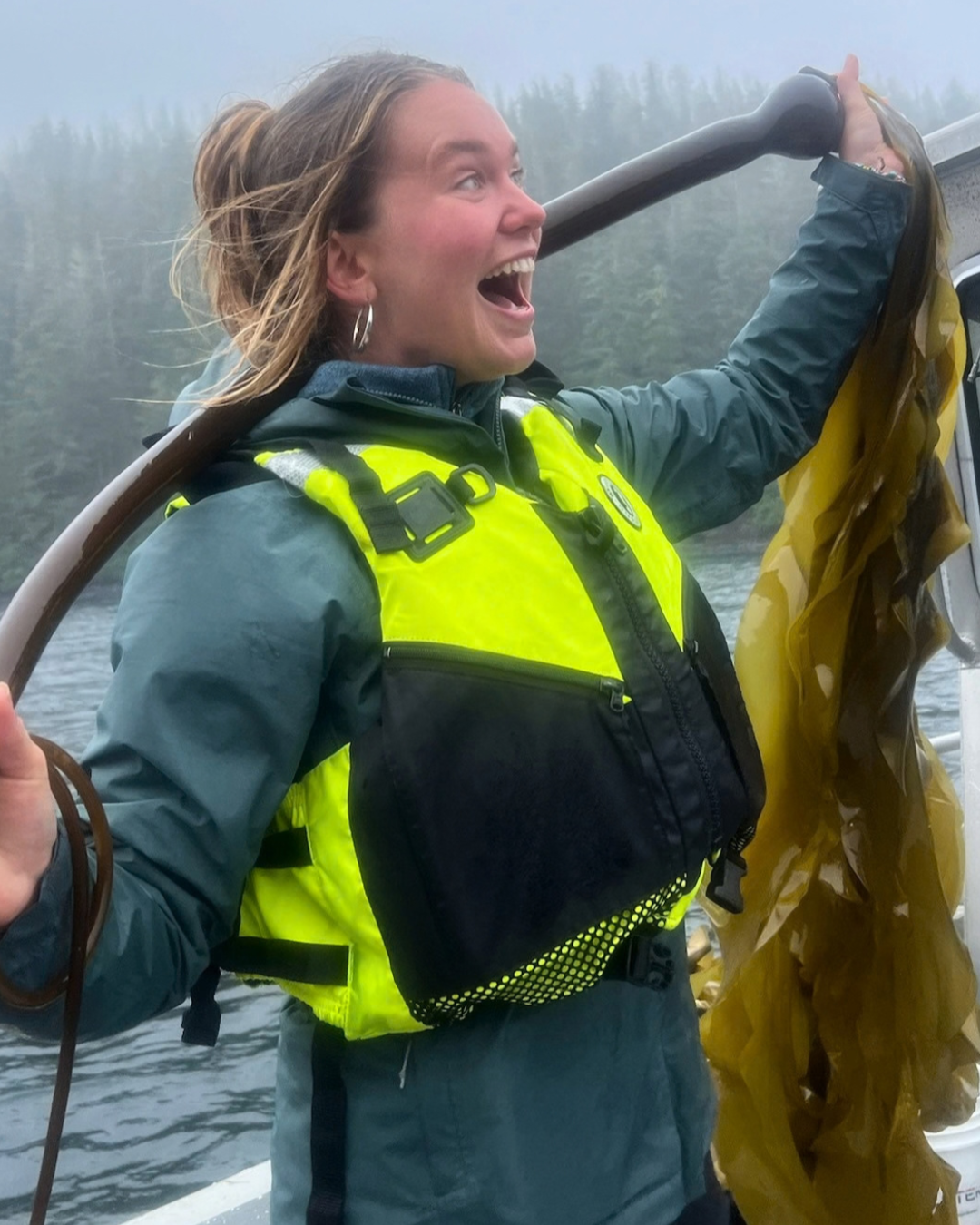
Ariana Skye Hervas-Jones
M.A from the University of St. Andrews and M.S. from the University College London
~ 2026 MIA Summer Intern
