Rethinking Conservation in a Changing World
By ERIKA Camacho
In the face of the rapid decline of endangered species and the growing demand for food security, conservation and aquaculture, two subjects that are rarely considered together in a coherent thought, are now being explored as complementary efforts that can work together.
While conservation biology has traditionally emphasized preserving ecosystems in their natural state, modern approaches increasingly embrace innovative, integrated methods to better support the protection and recovery of animal and marine species. Although there’s a dividing opinion when it comes to aquaculture, when done safely and sustainably, it has the potential to support conservation efforts, such as reducing the fishing/foraging pressures on wild populations and species restoration.
Here’s a brief history of conservation biology and aquaculture. The term “conservation biology”, as well as the formation of the field, was coined at a conference in San Diego, California in 1978. This conference is where the concerns around the loss of tropical habitat and species were discussed. But the practice of appreciating and caring for nature and natural resources has roots in many cultures and religions throughout history.
Aquaculture, sometimes referred to as “fish farming,” also has deep cultural and historic roots despite being portrayed as a “new” and “modern” concept. The practice of aquaculture dates back thousands of years. There’s evidence that suggests that ancient China practiced carp farming, ancient Egypt farmed tilapia, and that ancient Romans farmed oysters.
In the 1900s, scientists formalized the field of conservation biology and defined it as a “crisis discipline”, focusing on preventing species extinction and protecting habitats. Since then, most conservation efforts have centered around protected areas, such as national parks, wildlife refuges, and marine reserves, by reducing and minimizing human impact. This approach is also known as fortress conservation. Although fortress conservation has achieved notable successes throughout recent history, such as saving the American bison and bald eagle from extinction, it does have its limitations. Species reintroductions, like the gray wolves in Yellowstone National Park or the California condors, demonstrate how human intervention can be very impactful to conservation success.
Today, the field of conservation faces numerous complex challenges, including climate change, habitat loss, and pollution. Aquaculture is one of the methods and practices that conservation biology is gradually embracing as it evolves to address the modern challenges of our time. Aquaculture is the fastest-growing sector of global food production, now providing over half of the world’s seafood.
One of the ways aquaculture intersects with conservation is by assisting in relieving pressure on wild populations. For example, the farming of sea cucumbers, sturgeon, and sea urchins on the east coast can reduce the harvesting of wild individuals in regions where these animals are economically or culturally important. Seaweed and shellfish farming aid in supporting ecosystems: kelp farms absorb carbon dioxide and offer protection from storms and extreme ocean movements, and mussel and oyster farms filter various amounts of ocean water, promoting the health of the surrounding ecosystems. In some coastal areas, multi-species aquaculture systems-also referred to as Integrated Multi-Trophic Aquaculture or IMTA. These systems are designed to mimic natural food webs, recycling waste from one species to provide nutrients for another species.
Another important intersection between aquaculture and conservation is species restoration. Places like hatcheries have been used in conservation efforts to raise endangered or functionally extinct animals in captivity before reintroducing them back into the wild. This “strategy” has supported the recent recovery conservation efforts of the white abalone, the Olympia oyster, and the Devils Hole pupfish.
One of the most unique partners of Minorities In Aquaculture (MIA) is the Sunflower Star laboratory(SSL) in Moss Landing, California. It’s an unusual black sheep among the partners of MIA because most of the aquaculture partners focus on cultivating and providing seafood to their communities. Probably for good reason, I can’t imagine The Sunflower Star Lab doesn’t do that (mainly because “starfish” is not a common delicacy seafood in most places). Its focus is on using aquaculture in hopes of restoring and eventually reintroducing the Sunflower Star back into California waters, where it is “functionally extinct”. The Sunflower Sea Star is a predatory starfish whose population used to range from as far north as Alaska to some of the northern regions of Mexico. They are an essential keystone predator in kelp forest ecosystems. They prey on various small species along the ocean floor and tidal zones, but their primary preferred food is the sea urchin, a spiky, more rounded, distant relative of the Sunflower sea star. A brief summary of their endangered status can be found in other articles on the MIA website that discuss “Sea Star Wasting Syndrome”.
The goals and progress of the Sunflower Star Lab is a most recent example of how aquaculture and conservation are making huge strides in protecting and reviving a keystone endangered species.
Despite the promise of conservation and aquaculture, they are not without their risks. Poorly managed aquaculture systems can introduce invasive species, diseases, degrade water quality, and impact other wild species. To mitigate these problems, conservation aquaculture can consider using local broodstock, ensuring disease-free environments, and prioritizing small-scale, community-based approaches whenever possible.
Looking ahead, the future of marine conservation will depend on creating stronger connections between ecological restoration and responsible aquaculture practices. Instead of treating conservation and aquaculture as conflicting fields, it's time to recognize how well they can complement each other when it comes to protecting and maintaining marine biodiversity. Whether efforts are focused on restoring endangered species, coastal habitats, or supporting ecologically fragile areas, conservation aquaculture can offer a promising path as we move forward into the future. In today’s world that demands creativity, cooperation, and innovation, uniting conservation and aquaculture might be the path forward to sustaining the world’s expanse and beautiful marine ecosystem.
meet THE AUTHOR
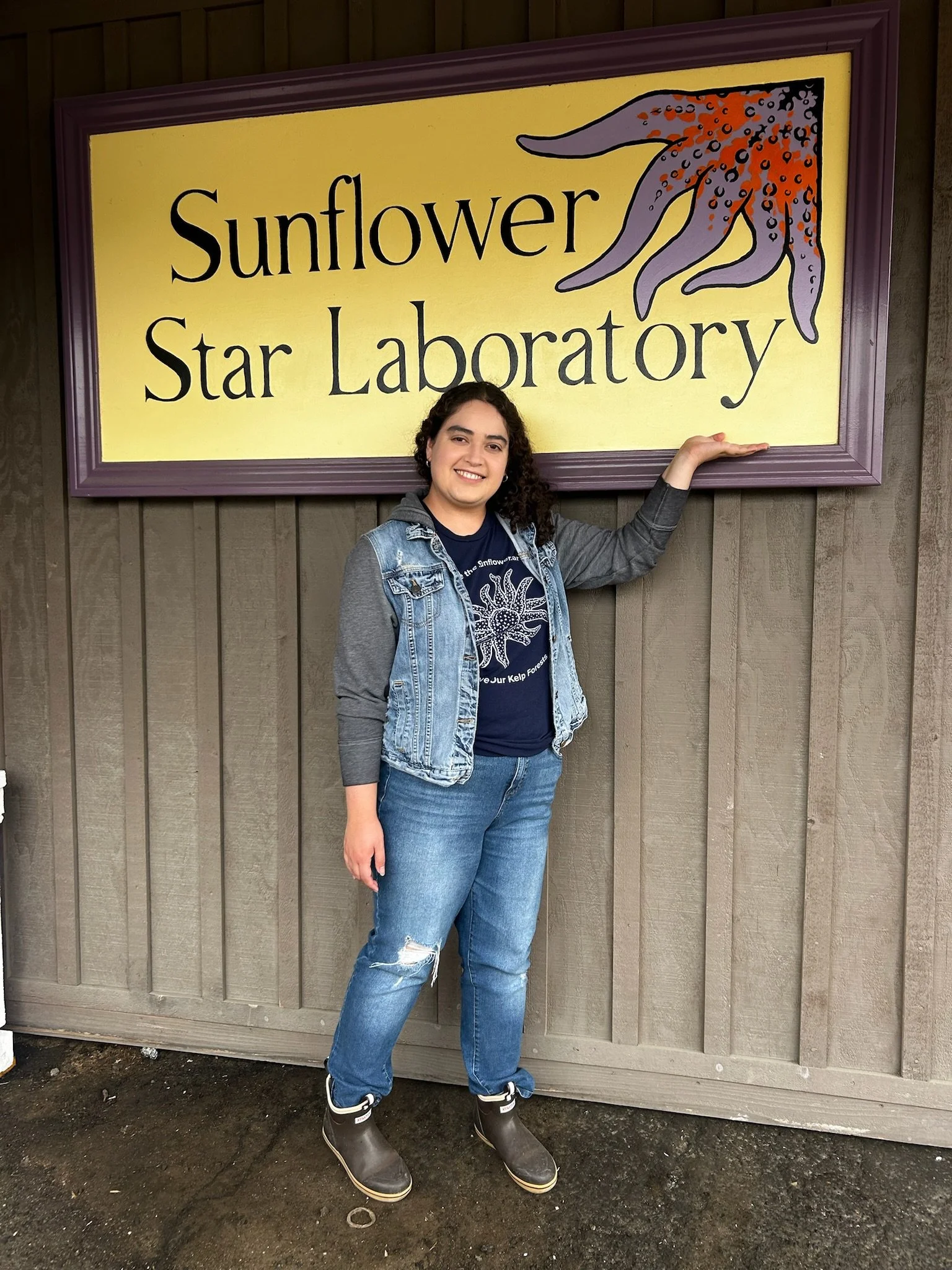
Erika Camacho
B.s. from University of California Santa Cruz & 2025 MIA Summer intern