Val’s Declassified Marine Science Survival Guide

By Valeria Guevara
So you’ve discovered your love for the marine world and now crave experience in the field, but don’t know where to look? You’re not alone. I and many others have felt this same uncertainty. Fortunately, over the past few years, I’ve gathered some helpful resources and insights that I hope will make your journey a little easier. These tips and resources should apply no matter where you're starting from.
Talk to Faculty & Grad Students
When I first started at Florida International University (FIU), I had no idea how to find internships or research positions. Everyone kept talking about “getting involved,” but I didn’t know where to begin. That changed when I made a connection with my biology lab TA, who was a first-year Ph.D. student. By the end of the semester, she invited me to intern in her lab and that’s where my journey truly began. Over two years, I gained hands-on experience in marine animal husbandry, learned how to use a YSI meter for water quality testing, and cared for juvenile lobsters and Caribbean king crabs. I even designed and conducted my own diet experiment on king crabs, which became my first independent research project. That experience taught me how to write a proposal, draft a scientific paper, create a poster, and present my findings. Don’t underestimate the power of talking to people, especially about your interests. You’ll never know who is keeping you in mind for certain roles.
Apply for an NSF REU (Research Experience for Undergraduates)
I first heard about REUs from a biology department email. I spent hours researching NSF-funded summer programs across the country and made a list of my top choices. The first year I applied, I didn’t get in and that’s okay! These programs are very competitive. What matters most is that you don’t give up.I reapplied the next year and was accepted into the Maryland Sea Grant REU, where I conducted a comparative ecological assessment between restored and fished oyster reefs. I gained experience in fish dissection, seine netting, isotope testing, and estuarine fieldwork. I even got the pleasure of attending a research cruise R/V sharp, this was something out of my wildest dreams! The program also offered valuable workshops in science communication, writing CVs, and preparing for graduate school. I ended the summer by presenting my work at a symposium through a lightning talk, poster, and paper.
Link to Directory ————> NSF REU
Join On-Campus or National Marine Organizations
One of the best things I did was join SWMS (Society for Women in Marine Science) at FIU. I eventually became chapter president, where I helped organize events and share resources with others. Through SWMS, I received a travel grant to attend the national SWMS Symposium, an incredible opportunity to connect with other women and gender minorities in the field. I also joined the mentor program and connected with my mentor Sophie who has helped me out and made me feel supported all throughout this year. These organizations offer more than just networking. They tend to host writing groups, share internships and fellowships, and provide a supportive community.
Here are a few great organizations to explore:
Minorities in Aquaculture
Sign Up for Listservs/Job Boards
A listserv is an email subscription service that shares job postings, internships, and research opportunities. These are great ways explore what options are out there and learn more about what you are interested in doing. Here are some of the most helpful ones I’ve joined:
Attend Conferences and Symposia
Conferences can seem intimidating, but they’re necessary in order to learn, present, and network. You can still attend conferences and not present anything there, you will still earn a lot from those around you. This fall I was able to attend the SWMS symposium and present my summer REU research at stony brook university in new york. I wouldnt have been able to attend have i not received their travel award, many conferences offer student discounts or travel grants, don't be afraid to ask or apply! I highly recommend student-friendly events like:
SWMS Symposium
ASLO (Association for the Sciences of Limnology and Oceanography)
BIMS Week
Local Sea Grant-hosted events
Your University’s Department Symposium
Use Social Media to help Discover Opportunities
Believe it or not, Instagram has been one of the most useful tools for discovering marine internships, scholarships, and community events. I found out and applied for this MIA 2025 internship because of instagram! If you train your algorithm right, your feed can be full of opportunities.
Here are some of my favorite Instagram science accounts I follow:
@libertyology @projectfin @swmsmarinescience @mia_npo @bluewavz @scie.co @floridaseagrant @miss_elasmo @angariocean @camille.lasbleiz @womeninoceanscience @dreamsofascientist @conservationopportunity
No matter where you're starting from, there are so many ways to get involved in marine science and aquaculture. Talk to people. Stay curious. Don’t be discouraged by rejection, dont be afraid to switch paths / careers.
meet THE AUTHOR
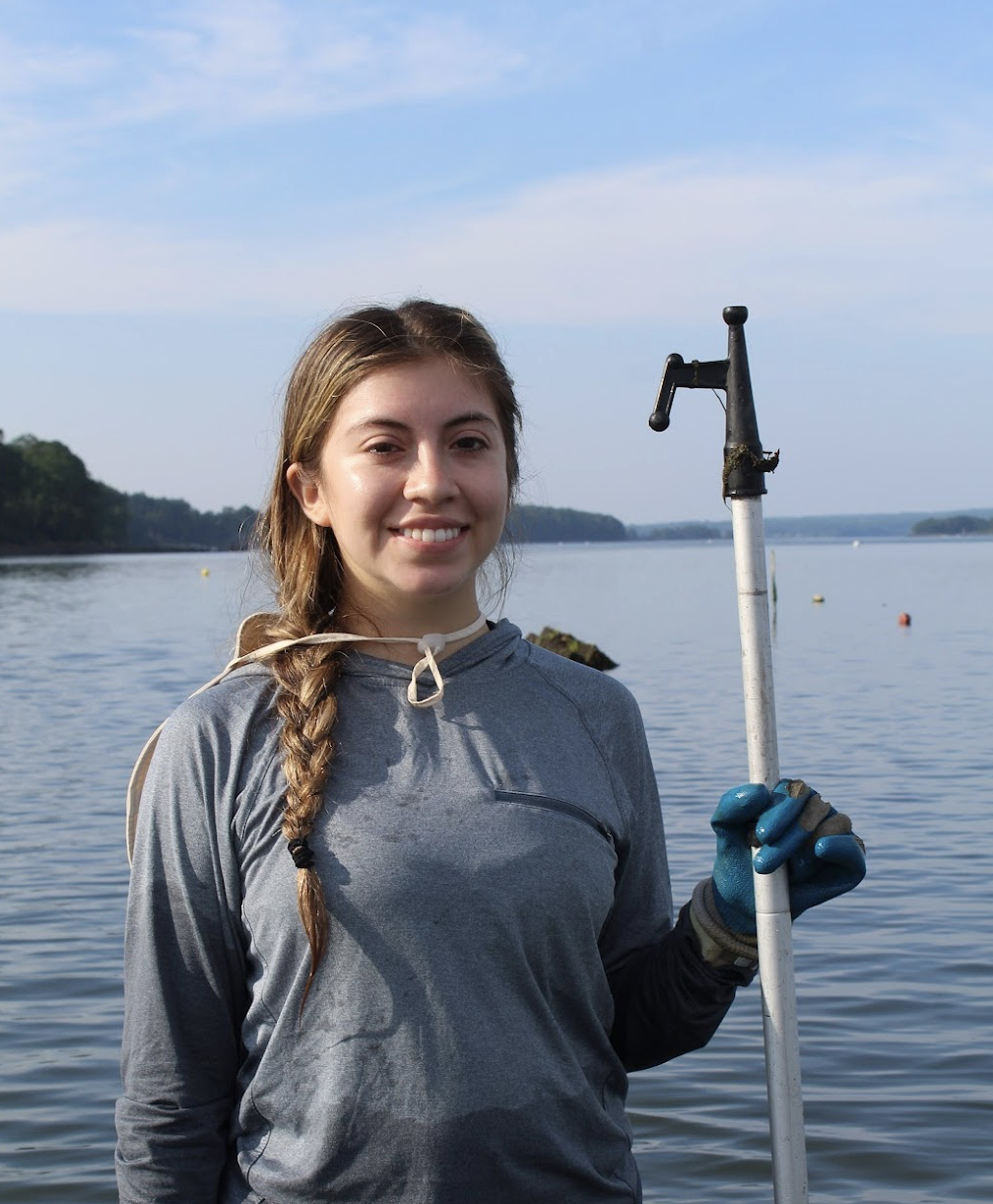
Valeria Guevara
B.s. from Florida international University & 2025 MIA Summer intern