Stubborn Curiosity: How I Found a Career in Aquaculture
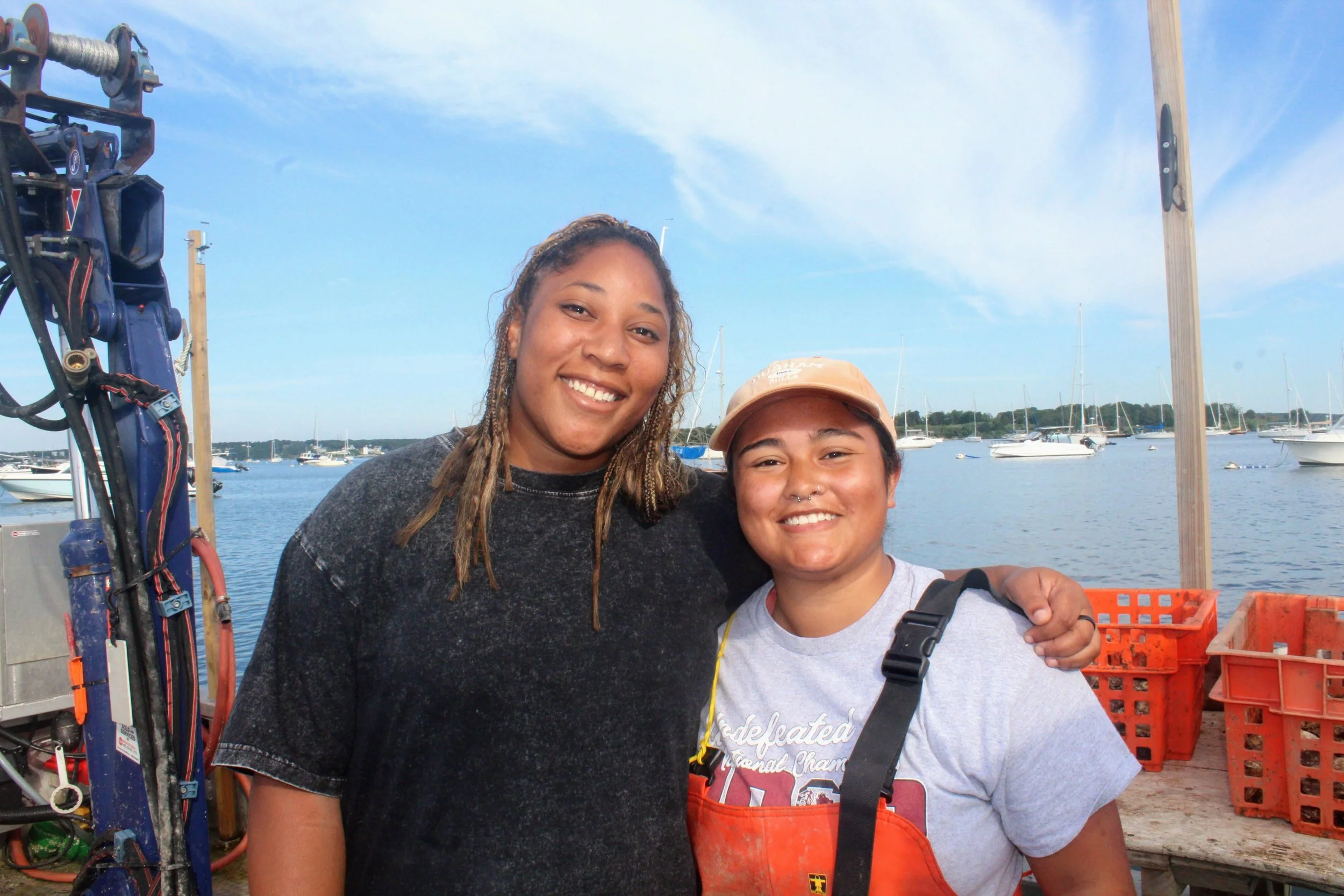
Alyssia And Imani at Walrus & Carpenter Oyster Farm, summer ‘25
From the Midwest to the Coast
My name is Alyssia Villarreal and I’m a proud member of MIA. I just recently graduated with my undergraduate degree from the University of South Carolina this past May with a B.S. in Marine Science. If you had asked me when I was a kid if I thought I would become a marine scientist, I would’ve told you no.
I grew up in southern Illinois where cornstalks seemed to outnumber people and the closest major body of water was over four hours away in Chicago. Even after my family moved to South Carolina where we were significantly closer to the coast, I didn’t consider a marine related field until I was in college. My journey into aquaculture was somewhat of a complicated one. When I first enrolled in my undergraduate, I didn’t know what I wanted to do. I knew I wanted to travel and experience different cultures so on a whim, I chose to major in Global Studies with a concentration in water quality. It wasn’t what I was extremely passionate about, but it still interested me. just as I was settling into it, I took an intro to the environment class…
The First Question That Changed Everything
I never knew that class would change my life.
At the time, I knew next to nothing about marine life. Then after watching a documentary, I was introduced to phytoplankton. I still don’t know what exactly about them fascinated me but it was the first time that I felt that I was hungry to learn more. I did a deep dive into the basics of phytoplankton and after my search I immediately booked an appointment with my professor to talk more about them.
He didn’t hold back in telling me that my pursuit of global studies was useless. While I can look back and take it as a blessing, in the moment I felt lost and unsure of my next steps. He spent the rest of our call persuading me to switch majors into marine science and by the end of our meeting I had an appointment booked to officially switch into the university’s School of Earth, Ocean, and Environment.
Choosing Persistence Over Comfort
By the time the switch was approved, I had started into my sophomore year. Almost none of the credits I had previously taken would switch over and I fell behind my graduating class. Like most other things in my life, I didn’t completely think through the consequences of drastically switching into a STEM degree from an arts one. It was tough. I never really gravitated towards STEM while I was in high school so a lot of the foundational knowledge I needed for college level courses was absent from my mind. I felt like I was worlds behind my peers. It was at this time that I noticed that I also struggled heavily with studying.
Maybe it was a mix of my embarrassment of not understanding the materials and difficulty to focus in the classroom but I reached a point where I felt like I hit a brick wall. I pride myself on being able to memorize material, but I struggled being able to apply it. Theory based classes were partially rough for me. Trying to understand the physics behind a wheel in motion is something I still have nightmares about. Microbiology is something I’ll run away from for the rest of my life and I’ll probably always need to look up the difference between moles and molars.
All of this combined left me with a ‘C’ average in most of my classes. I never had lower than a B in high school so it obviously left my parents extremely confused about why I was struggling so much. I didn’t know what to tell them. I still don’t know how to explain it. All I knew was that I felt like a failure.
Everyone else around me had grown up around the water in some way. They knew about common benthic animals, had seen how wind changes the directions of waves in person, and had been well acquainted with understanding how tides work. To me, it was all brand new. Professors tended to breeze over the basics of some material because they were under the impression that everyone had at one point been exposed.
I remember the embarrassment of having to google the world's “benthic” and “endemic” because I had never heard those words before. I had to put in extra work to understand things that I was supposed to have known. Things were so difficult for me I thought I had made a mistake. I had joined a phytoplankton lab and was constantly humiliated due to my lack of understanding of basic chemistry. The easy thing would’ve been for me to give up but one trait about myself that is both a blessing and a curse is that I’m extremely stubborn.
Expanding Horizons
I was over switching my major all the time trying to figure out what I wanted from life. I knew for a fact that I was curious about phytoplankton and I was determined to learn more about them. I poured myself into that lab and asked questions about everything even if I saw that they obviously thought it was something stupid. I grew hungry for more knowledge and I remember how much pride I felt when I was finally allowed to do something outside of washing dishes. I continued to ask questions; if not in class then online. The moment I allowed myself to become curious about everything I chased the answers without any restraint.
Then I did a semester abroad to the Galapagos and my life changed. I was exposed to all the ocean life that the world had to offer and I knew that I had made the right decision to pursue this. At this point I had known that phytoplankton is not something I want to make a career out of but I was frustrated because I had felt like I was right back at square one.
Finding Home in Aquaculture
Then I found MIA.
I remember vividly the first time I had learned about MIA. I was sitting at a cafe looking for internship opportunities with my friends when I saw that I had gotten an email from the university advertising a summer internship where I could gain experience in aquaculture. At the time, I had never heard of aquaculture before so like every new word I’ve come across, I googled it. Even after scrolling through multiple webpages about what aquaculture is and the different sectors that it is composed of I was still so confused but I was trying my hardest to get an internship under my belt and it was specifically geared towards minority women so I applied.
I was so nervous when I found out that I had gotten it. Suddenly I was making plans to spend the summer in Charleston and work on an oyster farm one month after learning that oysters were something that people ate. However, I knew to get the most of my experience I needed to just jump in head first and try to make the most of it. I never expected that it would change the entire trajectory of my life. I fell in love with everything about it. I felt so accomplished knowing that all my hard work was being nurtured into something that can feed multiple people and create lifelong memories.
From just that one summer in Charleston, my career in aquaculture has boosted beyond my wildest dreams. Through MIA I’ve had the opportunity to work in farms located from Rhode Island all the way to Florida. Now that I’ve graduated, I’m excited to pursue my future in aquaculture and see where it takes me next.
meet THE AUTHOR
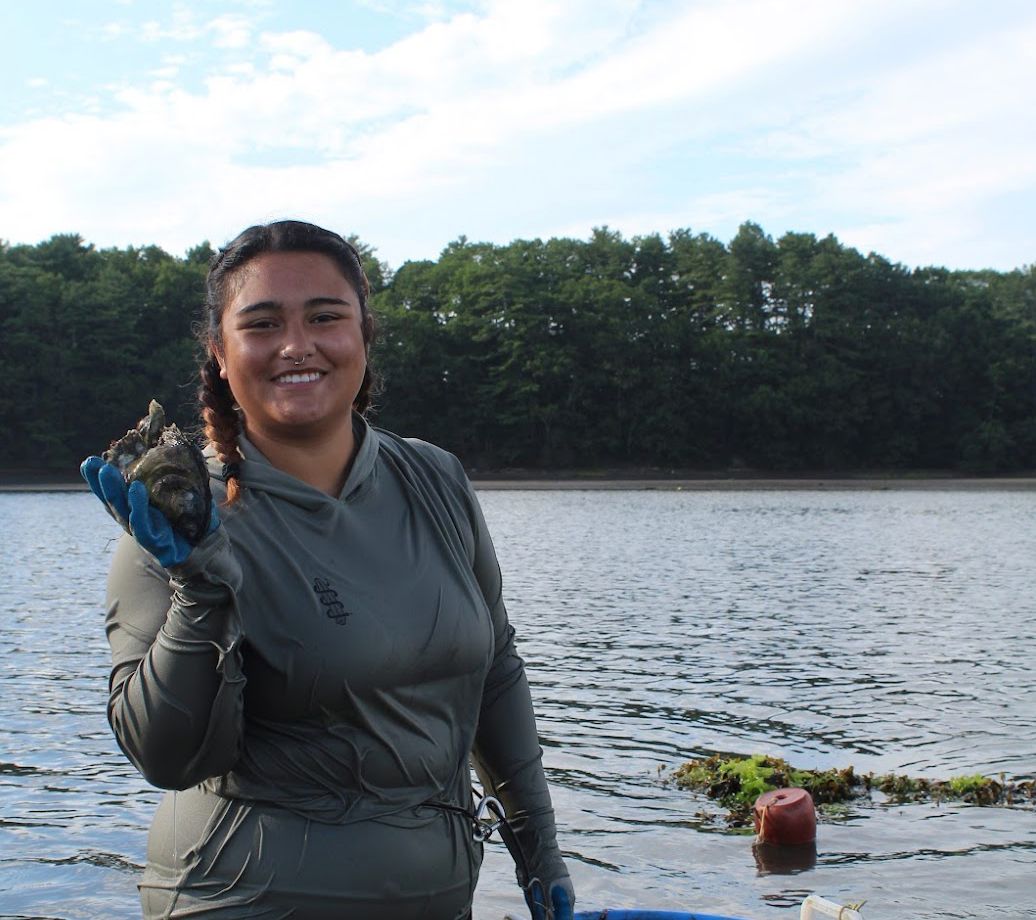
Alyssia Villarreal
B.s. from the university of South Carolina & 2025 MIA Summer intern