By Kaidan Hollins
Growing up on the New England Coast, having easy access to local seafood and coastal culture was second nature to me. Since middle school I have always thought it was fun to go fishing and catch my own food with my family. As a child, I thought of it only as something that was fun but I never really thought about how important it is to know where our food comes from and how it reaches our table.
Now that I study Marine Biology at the University of Rhode Island I started to learn about how important it is to farm seafood in a sustainable and eco-friendly environment. Educating myself on these topics sparked my curiosity in learning about a way to farm seafood that would benefit the local environments, while also boosting the economy of local communities. This led me to aquaculture, and more specifically, oyster farming.
State Seafood
Aquaculture is one of the fastest growing food industries in the world and this translates directly to Rhode Island. The state has one of the highest coastline-to-land ratios of about 0.37 miles of coastline to each square mile of land. This makes Rhode Island’s seafood industry one of the most prominent in the United States.
When looking at the importance of seafood in Rhode Island, you can look at its culinary history. The Ocean State is famous for popularizing multiple different seafood dishes, including stuffies, clear clam chowder, as well as clam cakes. Maybe the most distinctive, Rhode Island style calamari, which was named in 2014 as the state’s official appetizer.
Alec Bucki, a Rhode Island native shared this sentiment,
“Growing up in Rhode Island I thought that having seafood multiple times a week or being able to drive five minutes to a local seafood restaurant was normal. Living in Rhode Island many people, including family members and friends, have worked in the seafood industry whether it be as a cook, a fisherman, or a fishmonger. It seems to be something I have taken for granted while growing up. As I got older and met people from different states, I realized this wasn’t the norm and many people didn’t have access to local seafood, restaurants or they rarely ate seafood at all.”
Rhode Island is also known to have some of the busiest coastlines in the northeast. Characterized by countless inlets and deep natural harbors, it is the perfect location for recreational boating activities and ideal Atlantic winds. Hence why this state is known as the sailing capital of the world.
Source: Shape the Cape Summit. Jen Villa, Brett Tolley, and Ashley Lancaster
Building Local Economies
Reasons like this is why it can also be one of the hardest states to start or expand aquaculture farms. Rhode Island coastal lawmakers work very hard to maintain a balance between recreational use of its fast coastline as well as economic benefits, such as commercial aquaculture farming. This makes the process of expanding aquaculture farms or creating new ones an intricate and lengthy process.
If you compare Rhode Island aquaculture laws to other states you will notice that the 5% rule sticks out. Rhode Island allows only 5% of coastal salt ponds to be used for aquaculture. These ecosystems are especially advantageous for oyster growers because they provide protection from storms and water quality favorable for oysters.
Other states like Maine and New Jersey will put a limit on a lease based on the size of each individual plot and lease applications. The waterbody-wide cap Rhode Island has on coastal salt ponds is distinctive because in addition to lease size there is this additional element of the body of water as a whole.
My boss at Blue Acres Aquaculture has explained to me that trying to increase the size of your farm, when the body of water has already reached the 5% cap, is almost impossible. The only way for him to increase the size of his farm would be to buy out another farm or wait for another farm to retire and sell their property.
When wanting to start an aquaculture farm in Rhode Island, gaining rights to the area is managed under the “public trust doctrine” which states that the water and land beneath it is held in trust for all the citizens of the state. Aquaculture farms can get a limited lease for these submerged land
from the state, but they do not own it. It is often not an exclusive lease, and if a farmer abuses the lease provision, the state has the authority to revoke the lease.
Abuse of the lease can be constituted by not paying yearly fees, not submitting an annual report, or failure to comply with any conditions on their specific lease. The state does offer protections for the lease owner, though an example of this would be that the public capacity farm however it is illegal to disturb a farmers gear or their stock.
Source: Blue Acres Aquaculture
Connection to Seafood
The economic importance of seafood in Rhode Island is undeniable with a revenue of over 419 million dollars and supplying over 4,381 jobs in just the fishing industry in 2018. As aquaculture grew at a rate over 18% in the year of 2022 in the state of Rhode island, the net market value of products being shipped of aquaculture products for consumption also known as “farm gate value” was $7.2 million at its peak, but has now leveled at about $6 million annually.
With the large influx of money coming into this state through seafood sparks the question of why it is important to buy from these local restaurants and more importantly, who supplies them. My experience working in the seafood industry has given me insight on what it is like to work for a smaller local restaurant, versus larger seafood companies. Since 2022, I have been working in the seafood industry in some capacity.
I started my first year in Massachusetts at a clam shack in Rehoboth. This was my first time working at a local seafood restaurant. Watching someone run a small business was something I learned a lot from. We would have many returning customers who had been eating here for many years. I think the relationships that are created between the local business owners and their customers in the area is something that is very interesting and gives you a sense of pride.
One year later I started to work in the seafood industry in Rhode Island which I have found very rewarding and I am happy to still be a part of it until this day. When working at a seafood market/restaurant in Rhode Island I noticed many local customers would ask where we got our seafood from and they would often prefer to purchase seafood that was sourced locally.
Over time I noticed that some people would think twice about buying certain seafood if it came from another country, or somewhere that it would have to be clearly shipped over a long distance. I think this made me curious to find out why we sell seafood that came from local fisheries or aquaculture farms and what may have led me to working with Minorities In Aquaculture and Blue Acres Aquaculture Farm this summer.
Working in multiple local industries has personally given me reasons and the knowledge of why it is important to know where you purchase your products from but to others it may be something that they have not thought much of.
Buying Local
There are many benefits of buying local or investing in local seafood businesses. Small businesses in Rhode Island communities account for nearly 99% of businesses in the state and employ more than half of the Rhode Island workforce. Supporting these businesses helps create jobs, boost wages, and strengthen the state's economy. Shopping locally is not only good for the economy, but it is also good for the local environment for businesses like the one I am interning for, Blue Acres Aquaculture.
Shipping seafood inherently takes more fuel and energy. To help lower energy and fuel costs, buying locally is more cost effective and sustainable. Especially from commercial markets where goods have to be shipped over a long distance. For example, Blue Acres aquaculture sells to local businesses that are a five minute boat right away.
Knowing how and where you can support local businesses is another question people ask. The Department of Environmental Management in the state of Rhode Island has a “RI Grown Finder”. This tool on their website, not only lists upcoming events where local farmers markets and other sales take place around the state, but they also have a search tab to help you find food and vegetables that can be bought locally and when you should buy them.
Research from the American Independent Business Alliance also known as “AMIBA” shows how buying locally helps boost your local economy. The local multiplier affects how independent locally owned businesses can help your own community thrive.
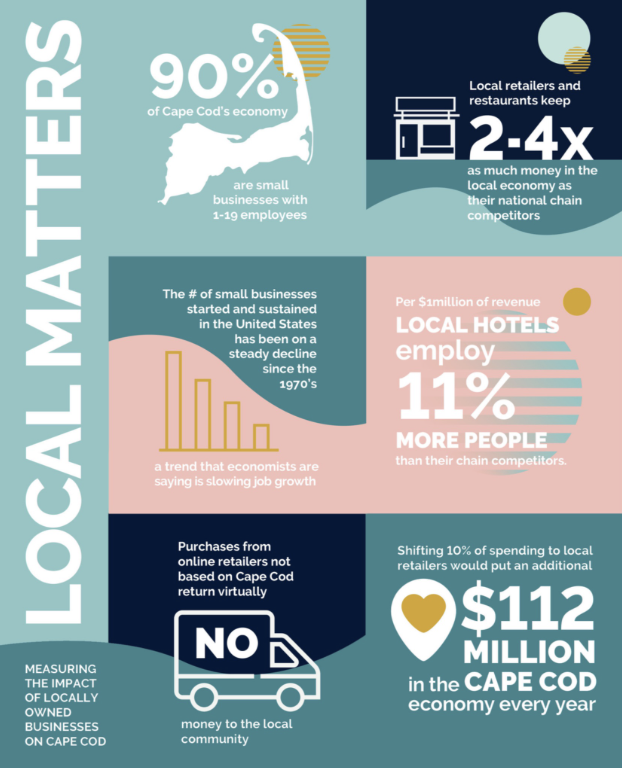
“The local multiplier occurs when you spend your dollars at a locally owned independent business instead of a chain store or online giant. Dollars recirculate through your local economy 2 to 4 times more than money spent at non-local companies. The exact amount of dollars circulated by local businesses vary by time, place, and industry.” AMIBA goes into further detail with studies all across the United States.
In New England specifically, there was a study done in Cape Cod, MA in 2020. Results from the study of local economies in this New England area showed that 90% of Cape Cod’s economy are small businesses, local companies keep 2-4 times more revenue in the local economy compared to national chains. I find studies like these very eye opening and something that should be more recognized. Being able to support your neighbors, boost your local economy, and help the environment are all factors that can give you peace of mind when looking for a place to spend your money.
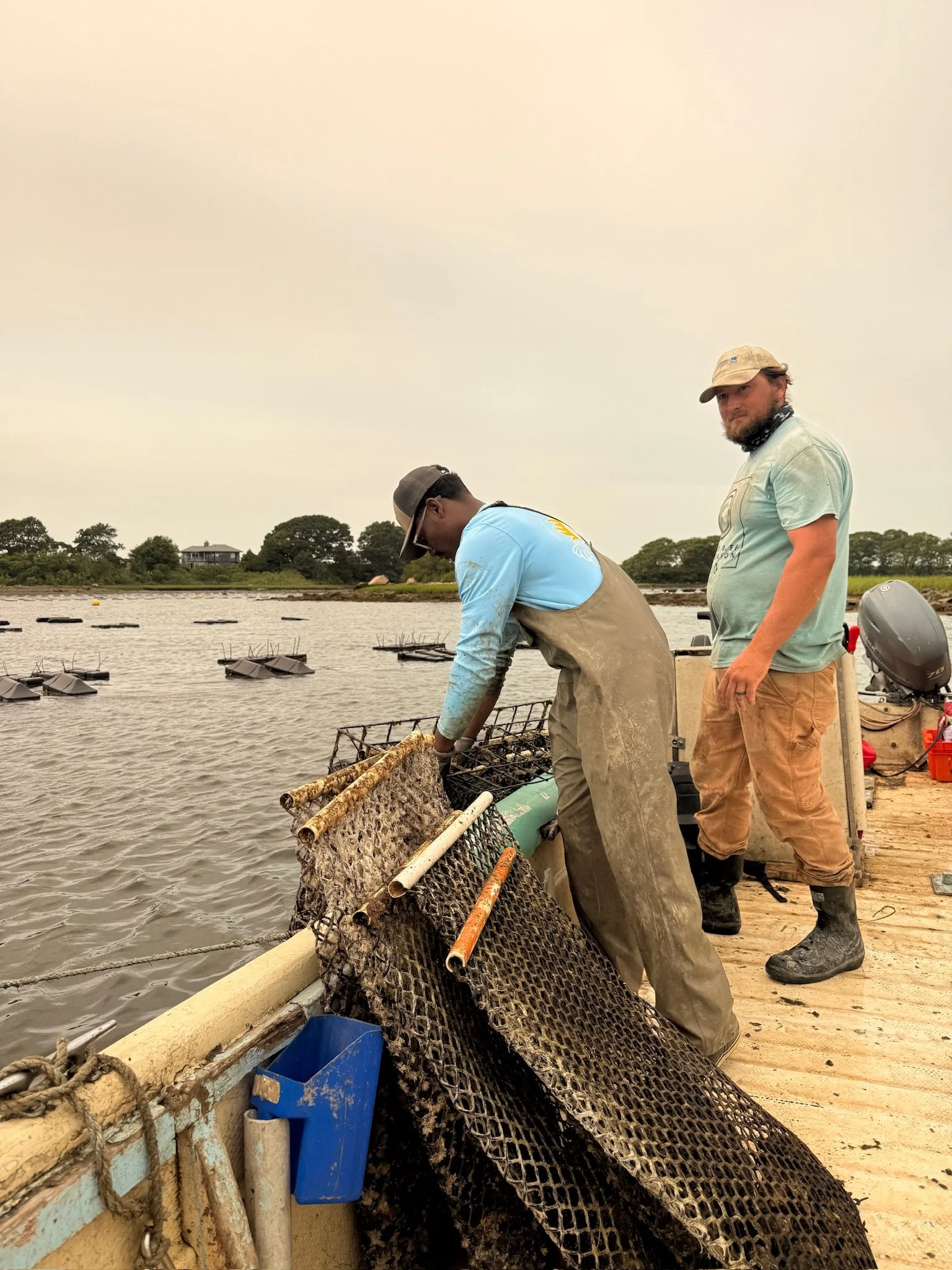
Kaidan during his MIA
summer internship
Full Circle Moments
Growing up on the New England coast, I always appreciated having fresh seafood available and enjoyed spending time fishing with my family. At the time, I viewed seafood simply as something we caught, cooked, and shared together. Through studying Marine Biology at the University of Rhode Island and working in the seafood industry, I have developed a much deeper understanding of everything that happens before seafood reaches someone's plate. What once seemed like a simple meal now represents the hard work of fishermen and aquaculture farmers, careful environmental stewardship, scientific research, and regulations that help protect Rhode Island's coastal resources.
Throughout this internship, I learned that aquaculture is much more than just growing oysters. It is an industry that supports thousands of jobs, contributes millions of dollars to Rhode Island's economy, and provides communities with a reliable source of locally produced seafood. At the same time, aquaculture must operate within strict regulations that balance commercial growth with environmental conservation and public access to the state's waterways. Although these regulations can make it difficult for farms to expand, they also help ensure that Rhode Island's coastal ecosystems remain healthy and productive for future generations.
My own experiences working in seafood markets and now with Blue Acres Aquaculture have allowed me to see these concepts firsthand. I have watched customers actively seek out locally harvested seafood because they value knowing where their food comes from and want to support businesses within their own communities. Those experiences have reinforced what I have learned in the classroom: understanding where our food comes from is about much more than knowing its origin. It is about recognizing the people, businesses, and ecosystems that make sustainable food production possible.
I hope more people begin asking where their seafood comes from and consider supporting local fishermen, aquaculture farms, and small seafood businesses whenever possible. Choosing locally harvested seafood not only provides fresher products, but also strengthens Rhode Island's economy, reduces the environmental impacts associated with long-distance transportation, and helps preserve the state's rich maritime heritage.
As someone who has grown up surrounded by Rhode Island's coastal culture, I now have a much greater appreciation for the work that goes into producing sustainable seafood. That appreciation has strengthened my interest in marine biology and has shown me that protecting our coastal resources today is essential to ensuring that future generations can continue to enjoy the same traditions and opportunities that first inspired my interest in the ocean.
Meet the Author
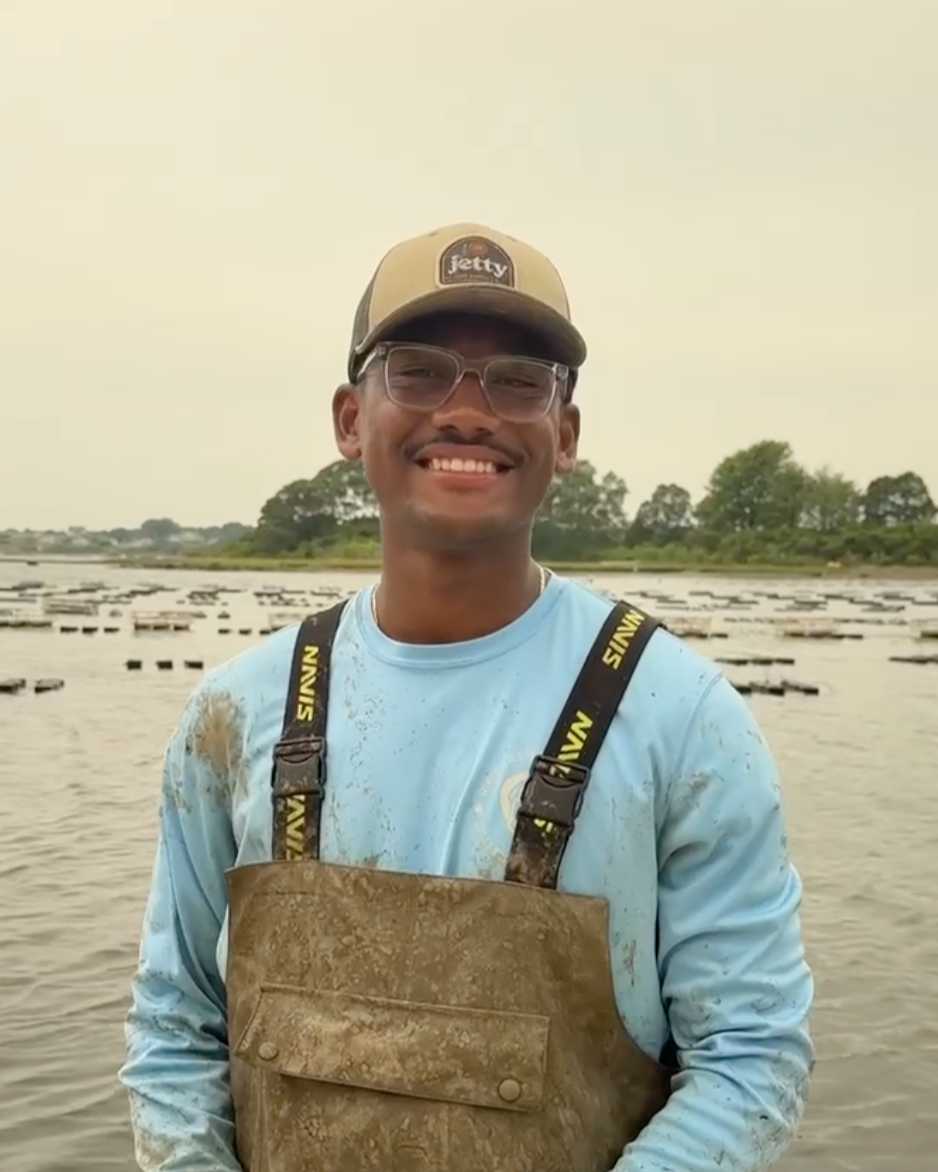
Kaidan Hollins
B.S. from the University of Rhode Island
~ 2026 MIA Summer Intern
